
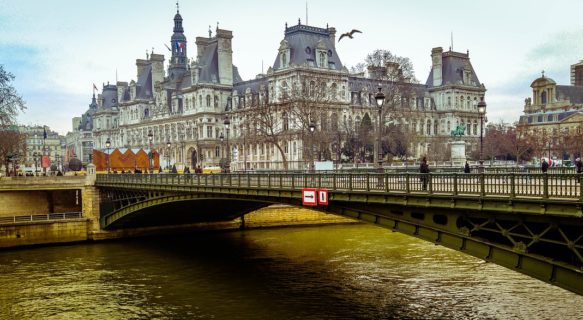
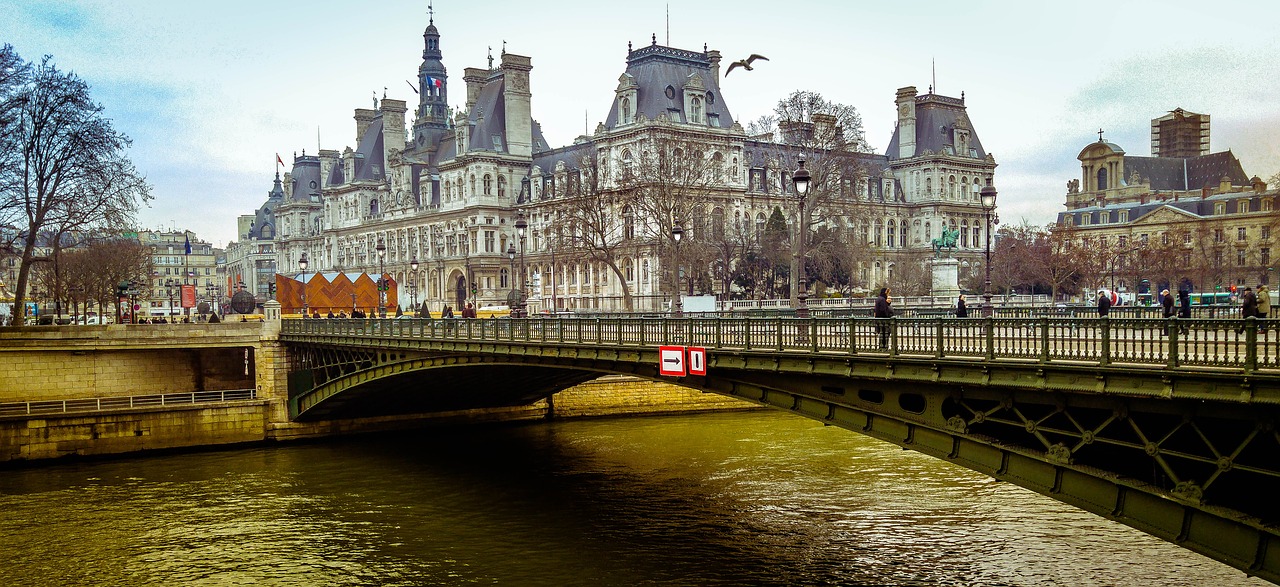

Paris, the cosmopolitan capital of France, is one of the largest agglomerations in Europe, with 2.2 million people living in the dense (105 km²) central city, 7 million people in the Metropole du Grand Paris (814 km²) and almost 12 million people living in the metropolitan area. In the north of the country on the river Seine, Paris has the reputation of being the most beautiful and romantic of all cities, brimming with historic associations and remaining vastly influential in the realms of culture, art, fashion, food and design. Dubbed the City of Light (la Ville Lumière) and Capital of Fashion, it is home to some of the world’s finest and most luxurious fashion designers and cosmetics, such as Chanel, Christian Dior, Yves Saint-Laurent, Guerlain, Lancôme, L’Oréal, and Clarins. A large part of the city, including the banks of the Seine, is a UNESCO World Heritage Site. The city has the second highest number of Michelin-starred restaurants in the world (after Tokyo, which is much larger) and contains numerous iconic landmarks such as the Eiffel Tower, the Arc de Triomphe, Notre-Dame de Paris, the Louvre, the Moulin Rouge and the Basilique du Sacré Cœur, making it one of the most popular international tourist destinations in the world, with around 14 million tourists annually.
Districts
The city of Paris itself is officially divided into 20 districts called arrondissements, numbered from 1 to 20 in a clockwise spiral from the centre of the city (which is known as Kilomètre Zéro and is located at the front of Notre Dame). Arrondissements are named according to their number. You might, for example, stay in the “5th”, which would be written as 5e in French. The 12th and 16th arrondissements include large suburban parks, the Bois de Vincennes, and the Bois de Boulogne respectively.
The very best map you can get for Paris is called “Paris Pratique par Arrondissement” which you can buy for about €5 at any news stand. It makes navigating the city easy. The various tourist information centres and hotels in Paris also provide various city and metro maps for free and which contain all the essential details for a tourist.
Each arrondissement has its own unique character and selection of attractions for the traveller:

| Central Paris (1st arr., 2nd arr., 3rd arr., 4th arr.) 1e: The geographical centre of Paris and a great starting point for travellers. The Musée du Louvre, the Jardin des Tuileries, Place Vendôme, Les Halles shopping centre, Palais Royal, Comédie-Française, théatre du Châtelet, Arc de Triomphe du Carrousel, and the western half of Île de la Cité (Paris’s largest island). 2e: The central business district of the city — the Bourse (the Paris Stock Exchange), Opéra-Comique, Théâtre des Variétés, Passage des Panoramas, Théâtre des Bouffes Parisiens and the former Bibliothèque Nationale are here. 3e: Archives Nationales, Musée Carnavalet, Conservatoire des Arts et Métiers, Hôtel de Soubise, the former Temple fortress, and the northern, quieter part of the Marais. 4e: Notre-Dame de Paris, the Hôtel de Ville (Paris city hall), Hôtel de Sully, Beaubourg, Rue des Rosiers and the Jewish Quarter, Le Marais, Bazar de l’Hôtel de Ville, Mémorial de la Shoah, Centre Georges Pompidou, l’atelier Brancusi, Place des Vosges, Bibliothèque de l’Arsenal, Saint-Jacques Tower and the Parisian island Île Saint-Louis as well as the eastern half of Île de la Cité. |
| Left Bank (5th arr., 6th arr., 7th arr.) 5e: This is the eastern part of the Quartier latin (Latin Quarter). Jardin des Plantes, Muséum National d’Histoire Naturelle, Musée de Cluny, the Panthéon, La Sorbonne, Montagne Sainte-Geneviève, Église Saint-Séverin, La Grande Mosquée, Le Musée de l’AP-HP. 6e: This contains the western part of the Quartier latin. Jardin du Luxembourg as well as its Sénat, Place Saint-Michel, Église Saint-Sulpice and Saint-Germain-des-Prés. 7e: Tour Eiffel and its Parc du Champ de Mars, Les Invalides, Musée d’Orsay, Assemblée nationale and its subset administrations, École Militaire, Musée du quai Branly, and Parisian mega-store Le Bon Marché. |
| Inner Paris (8th arr., 9th arr.) 8e: Champs-Élysées, Arc de Triomphe, Place de la Concorde, le Palais de l’Élysée, Église de la Madeleine,Jacquemart-André Museum, Gare Saint-Lazare, Grand Palais, Petit Palais, and the western half of Boulevard Haussman. 9e: Opéra Garnier, Galeries Lafayette, Musée Grévin, Folies Bergère, and the eastern half of Boulevard Haussman. |
| East Paris (10th arr., 11th arr., 12th arr.) 10e: Canal Saint-Martin, Gare du Nord, Gare de l’Est, Porte Saint-Denis, Porte Saint-Martin, Passage Brady, Passage du Prado, and Église Saint-Vincent-de-Paul. 11e: The bars and restaurants of Rue Oberkampf, Bastille, Nation, New Jewish Quarter, Cirque d’Hiver, and Église Saint-Ambroise. 12e: Opéra Bastille, Bercy Park and Village, AccorHotels Arena, Promenade Plantée, Quartier d’Aligre, Gare de Lyon, Cimetière de Picpus, Viaduc des arts, the Bois de Vincennes, and the Zoo de Vincennes. |
| South Paris (13th arr., 14th arr., 15th arr.) 13e: Quartier Asiatique (Asian Quarter), Place d’Italie, La Butte-aux-Cailles, Bibliothèque Nationale de France (BNF), Gare d’Austerlitz, Manufacture des Gobelins, the Olympiades, the Tolbiac district, Pitié-Salpêtrière hospital. 14e: Cimetière du Montparnasse, Gare Montparnasse, La Santé Prison, Denfert-Rochereau, Parc Montsouris, Stade Charléty, Cité Internationale Universitaire de Paris, and the public entrance to the catacombs. 15e: Tour Montparnasse, Porte de Versailles, Front de Seine, La Ruche, Parc André Citroën, Aquaboulevard and quartiers Saint-Lambert, Necker, Grenelle and Javel. |
| West Paris (16th arr., 17th arr.) 16e: Palais de Chaillot, Musée de l’Homme, the Bois de Boulogne, Cimetière de Passy, Parc des Princes, Musée Marmottan-Monet, Trocadéro, Maison de la Radio, and Avenue Foch. 17e: Palais des Congrès, Place de Clichy, Parc Monceau, Marché Poncelet, and Square des Batignolles. |
| Paris Hills (18th arr., 19th arr., 20th arr.) 18e: Montmartre, Pigalle, Barbès, Basilica of the Sacré Cœur, Église Saint-Jean-de-Montmartre, and Goutte d’Or can be found here. 19e: Cité des Sciences et de l’Industrie, Parc de la Villette, Bassin de la Villette, Parc des Buttes-Chaumont, Cité de la Musique, Canal de l’Ourcq, and Canal Saint-Denis can be found here. 20e: Cimetière du Père-Lachaise, Parc de Belleville, and quartiers Belleville and Ménilmontant. |
- La Défense. Although it is not officially part of the city, this skyscraper district on the western edge of town is on many visitors’ must-see lists for its modern architecture and public art.
Beyond central Paris, the outlying suburbs are called La Banlieue. Schematically, those on the west of Paris (Neuilly-sur-Seine, Boulogne-Billancourt, Saint Cloud, Levallois) are wealthy residential communities. Those to the northeast are poorer communities, much populated by immigrants.
Understand
Due to high expectations, a tight schedule, and large crowds and long lines during high season, the city might disappoint some visitors. Foreign visitors who have an idealized view of Paris, might be shocked by the typical challenges of visiting any large city; crime, traffic noise, pollution, garbage, and relatively high costs. In the worst case, visitors might experience the Paris syndrome; a psychological state of delusion.
To enjoy the wonders of Paris, make realistic plans. The amounts of attractions and landmarks is overwhelming; visiting only the most famous ones takes more than a week. The city has also more to offer for people who take time for a calm stroll along the backstreets. If your time in the city is short, be selective, and save some attractions for your next visit.
History
Paris started life as the Celto-Roman settlement of Lutetia on the Île de la Cité, the island in the Seine currently occupied by the Cathédral de Nôtre Dame. It takes its present name from the name of the dominant Gallo-Celtic tribe in the region, the Parisii. At least that’s what the Romans called them, when they showed up in 52 BCE and established their city Lutetia on the left bank of the Seine, in what is now called the “Latin Quarter” in the 5th arrondissement.
The Romans held out here for as long as anywhere else in the Western Empire, but by 508 CE they were gone, replaced by Clovis of the Franks, who is considered by the French to have been their first king. Clovis’ descendants, aka the Carolingians, held onto the expanded Lutetian state for nearly 500 years through Viking raids and other calamities, which finally resulted in a forced move by most of the population back to the islands which had been the centre of the original Celtic village. The Capetian Duke of Paris was voted to succeed the last of the Carolingians as King of France, ensuring the city a premier position in the medieval world. Over the next several centuries Paris expanded onto the right bank into what was and is still called le Marais (The Marsh). Quite a few buildings from this time can be seen in the 4th arrondissement.
The medieval period also witnessed the founding of the Sorbonne. As the “University of Paris”, it became one of the most important centres for learning in Europe—if not the whole world, for several hundred years. Most of the institutions that still constitute the University are found in the 5th, and 13th arrondissements.
In the late 18th century, there was a period of political and social upheaval in France and Europe, during which the French governmental structure, previously a monarchy with feudal privileges for the aristocracy and Catholic clergy, underwent radical change to forms based on Enlightenment principles of nationalism, citizenship, and inalienable rights. Notable events during and following the revolution were the storming of the Bastille 4th arrondissements, and the rise and fall of Napoleonic France. Out of the violent turmoil that was the French Revolution, sparked by the still known Passion des Français, emerged the enlightened modern day France.
The Paris of today was built long after the Capetian and later the Bourbon Kings of France made their mark on Paris with the Louvre and the Palais Royal, both in the 1st. In the 19th century, Baron von Hausmann set about reconstructing the city, by adding the long straight avenues and replacing many of the then existing medieval houses, with grander and more uniform buildings.

New wonders arrived during La Belle Époque, as the Parisian golden age of the late 19th century is known. Gustave Eiffel’s famous tower, the first metro lines, most of the parks, and the streetlights (which are partly believed to have given the city its epithet “the city of light”) all come from this period. Another source of the epithet comes from Ville Lumière, a reference not only to the revolutionary electrical lighting system implemented in the streets of Paris, but also to the prominence and aura of Enlightenment the city gained in that era.
The twentieth century was hard on Paris, but thankfully not as hard as it could have been. Hitler’s order to burn the city was thankfully ignored by the German General von Choltitz who was quite possibly convinced by a Swedish diplomat that it would be better to surrender and be remembered as the saviour of Paris, than to be remembered as its destroyer. Following the war, the city recovered quickly at first, but slowed in the 1970s and 1980s when Paris began to experience some of the problems faced by big cities everywhere: pollution, housing shortages, and occasionally failed experiments in urban renewal.
During this time however, Paris enjoyed considerable growth as a multi-cultural city, with new immigrants from all corners of the world, especially La Francophonie, including most of northern and western Africa as well as Vietnam and Laos. These immigrants brought their foods and music, both of which are of prime interest for many travellers.
Immigration and multi-culturalism continues in the 21st century with a marked increase in the arrival of people from Latin America, especially Mexico, Colombia, and Brazil. In the late 1990s, it was hard to find good Mexican food in Paris, whereas today there are dozens of possibilities from lowly taquerias in the outer arrondissements to nice sit-down restaurants on the boulevards. Meanwhile Latin music from salsa to samba is all the rage (well, alongside Paris lounge electronica).
The 21st century has also seen vast improvements in the general liveability of Paris, with the mayor’s office concentrating on reducing pollution and improving facilities for soft forms of transportation including a huge network of cycle paths, larger pedestrian districts and newer faster metro lines. Visitors who normally arrive car-less are the beneficiaries of these policies as much as the Parisians themselves are.
Climate
| Climate | Jan | Feb | Mar | Apr | May | Jun | Jul | Aug | Sep | Oct | Nov | Dec |
|---|---|---|---|---|---|---|---|---|---|---|---|---|
| Daily highs (°C) | 7 | 9 | 12 | 16 | 20 | 23 | 25 | 25 | 22 | 16 | 11 | 7 |
| Nightly lows (°C) | 3 | 3 | 5 | 8 | 11 | 14 | 16 | 17 | 14 | 9 | 6 | 4 |
| Precipitation (mm) | 54 | 44 | 49 | 53 | 65 | 55 | 63 | 43 | 55 | 60 | 52 | 59 |
In Western Europe, Paris has a maritime climate with cool winters and warm summers. The moderating effect of the Atlantic Ocean helps to temper temperature extremes in much of western Europe, including France. Even in January, the coldest month, temperatures nearly always exceed the freezing point with an average high of 7°C (45°F). Snow is not common in Paris, although it will fall a few times a year, with major snowstorms occurring every few years. Most of Paris’s precipitation comes in the form of light rain year-round.
Summers in Paris are warm and pleasant, with an average high of 25°C (78°F). Spring and fall are normally cool and wet.
Get in
By plane
Paris is served by two international airports – for more information, including arrival/departure times, check the official sites.
Charles de Gaulle International Airport (Roissy)
- Main article: Paris Charles de Gaulle Airport
1 Paris Charles de Gaulle Airport (CDG IATA) is the main airport of the city. It is located north of Paris and is connected by train, bus and taxi. For detailed information on arriving and departing Paris from this airport please consult the main article linked above.
Transit Summary: The RER train line “B” connects CDG airport to central Paris and is the fastest and most economical option for most travelers. Signs in the airport will direct you to the platform. Self-serve electronic kiosques sell tickets. The kiosques provide service in multiple languages, including English. Some trains will stop at each station along the way to Paris. Express trains with fewer stops are available during off-peak hours. The stations Gare du Nord, Châtelet-Les Halles, Saint-Michel Notre-Dame, Luxembourg, Port-Royal, Denfert-Rochereau and Cité Universitaire are always served. Your ticket will allow you to transfer at one of the aforementioned stations to the Metro and other RER lines within Paris to complete your journey. The one-way trip costs €10 for adults, 7€ for children aged 4 – 9, and free for children under 4 (prices as of August 1, 2016).
If you arrive to CDG Airport at night you’ll need a Noctilien bus to get to the city centre. The bus stops at all three terminals (in terminal 2F it will be the second level in the departure section, difficult to find, but it really exists). The bus leaves every 30 min after 12:30 (see timetable [1]). The buses you’ll need are N140 and N143; the price is 4 T+ tickets (€8 if bought on board).
Orly International Airport
- Main article: Paris Orly Airport
2 Paris Orly Airport (ORY IATA), this older international airport is southwest of the city and is used mainly by Air France for domestic departures, and international departures by European carriers. It consists of two terminals: Terminal Sud (south) and Terminal Ouest (west) connected by light rail. The airport is connected with Paris by bus and light rail. For detailed information on arriving and departing Paris from this airport please consult the main article linked above.
Orly is roughly 25-35 min from Paris via the OrlyBus, which departs from Métro Denfert-Rochereau (line 6); the price is €8 (as of 2017). There are buses every 8-15 minutes from the Orly Sud (Platform 4) and it stops at Orly Ouest on its way to the city. Tickets can be bought at a counter near the baggage claim area or directly at the counter in Platform 4. The tickets need to be validated once on the bus. Another option is tramway T7 that takes you to the Métro Villejuif – Louis Aragon (Metro 7) in 30 min, but it stops on the way and is designed for commuters and not for travellers. Tramway T7 costs a single T+ (metro/bus/tram) ticket (€2 if bought on board the bus) and runs every 10 min, stopping at airport level -1. Passes covering zones 1-4 are accepted, excepted the day pass “Mobilis” on the Orlybus.
Via rail the airport can be reached by a southern branch of the RER-B line that heads from Paris in the direction of Saint-Rémy-les-Chevreuse (not Robinson). At Antony station RER-B line connects with the Orlyval light rail that carries passengers to both terminals of the airport. Orlyval runs every 4-7 min and costs €12.05 (as of 2017) for transfer to Paris, including connections to central area metro stations. The RER B from Antony runs through Paris to Aéroport Charles de Gaulle. The airport can be also reached by RER-C trains heading from Paris to Massy or Pont de Rungis. From Pont de Rungis-Aéroport d’Orly station passengers get to the airport within 10 minutes by a shuttle bus. The travel from Paris downtown to the airport by RER-C and the shuttle costs €6.85 (as of 2017).
Connect
Wi-Fi Internet access is provided free of charge.
Beauvais (Aéroport de Beauvais Tillé)
3 Beauvais (BVA IATA), a distance north of the city, is a smaller regional airport that is used by some low-cost carriers such as Ryanair and WizzAir. Like many small airports there is a cartel in operation in the form of the airport operated shuttle service connecting with the Métro at Porte Maillot station. Buses run even during the small hours of the morning (06:00). Buses leave 20 min after each flight arrives, and a few hours before each flight departs. Exact times can be found on the Beauvais Airport website. The journey will take about an hour in good traffic conditions, and costs €16 each way, there is no reduced price for children over the age of 2 years. Unless you hire a car this is the most realistic way to head toward Paris, hence why the airport charge the price they do. The alternative is a train service between Gare du Nord and Beauvais, and a connecting shuttle or taxi to the airport. This journey costs more and takes longer. Missing the shuttle bus could mean a taxi fare well over €100.
Airline Shuttles
In addition to public transport, Air France operates shuttles between Charles de Gaulle and Paris (€17), Orly and Paris (€12) and between the two airports (€20). Discounts apply for young/group travellers and online bookers. Note that if you have connecting Air France flights that land and depart from different airports, you would still generally need to fetch your luggage after landing, catch either the Air France shuttle or a taxi (readily available at all airports) to the other airport and check-in again. This altogether could take up to 2 hours, particularly if traffic is at its worst. It is also common to lose time during disembarking, as passengers often need to get off on the tarmac and get on buses which will take them to the terminal. Be sure you have sufficient time between flights to catch your connection. Check-in counters usually close 30 min before the flight departs, longer if flights are international.
By train

Paris is well connected to the rest of Europe by train. There are seven different terminus stations in central Paris and although they are not all in the same district, they are all connected to the Metro and RER networks. You will probably want to know in advance at which station your train is arriving, so as to better choose a hotel and plan for transport within the city.
- Gare du Nord, (10th), Métro: Gare du Nord – TGV trains to and from Belgium, the Netherlands, west Germany (Aachen, Cologne, Düsseldorf, Duisburg, Essen) (Thalys), and the United Kingdom (Eurostar from London and Kent) and regular trains from Northern Europe.
- Gare d’Austerlitz, (13th), Métro: Gare d’Austerlitz – regular trains to and from the center and southwest of France (Orléans, Limoges, Toulouse the long way) and the majority of night trains.
- Gare de l’Est, (10th), Métro: Gare de l’Est – TGV to and from Luxembourg, ICE/TGV to and from south Germany (Saarbrücken, Kaiserslautern, Mannheim, Frankfurt, Karlsruhe, Stuttgart, Augsburg, and Munich), RZD night train to and from Russia (Moscow), Belarus (Minsk), Poland (Warsaw, Poznan) and Germany (Berlin, Erfurt).
- Gare de Lyon, (12th), Métro: Gare de Lyon – regular and TGV trains to and from southern and eastern France: French Alps, Marseille, Lyon, Dijon, Switzerland (Basel, Geneva, Lausanne, Bern, Zurich) and southwest Germany (Müllheim, Freiburg im Breisgau). You can also catch dat (Turin, Milan) and overnight trains (Milan, Verona, Padua, Venice) from and to Italy.
- Gare de Bercy, (12th), Métro: Bercy. Regular trains to Auvergne and Burgundy.
- Gare St Lazare, (8th) Métro: St-Lazare – trains to and from Basse-Normandie, Haute-Normandie.
- Gare Montparnasse, (15th), Métro: Montparnasse-Bienvenüe – TGV and regular trains to and from the west and south-west of France (Tours, Brest, Rennes, Nantes, Bordeaux, Toulouse the fastest way and Irún in Spain). Gare Vaugirard is an extension of Gare Montparnasse.
The SNCF (French national railway authority) operates practically all trains within France excluding the Eurostar to London, the Thalys to Brussels and onward to the Netherlands and Germany, and some low-cost services such as iDTGV and Ouigo (although they are owned by the SNCF, they are considered as different rail companies). There are also a few local lines of high touristic interest which are privately owned. All SNCF, Eurostar and Thalys tickets can be bought in railway stations, city offices and travel agencies (no surcharge). SNCF relies on travel agencies for selling tickets online, the main one being Voyages SNCF (you will need to use a chip-enabled card, and have to have the one used to pay the tickets with you to retrieve the actual tickets in any SNCF station, some foreign cards won’t be accepted) and Trainline (easier to use, and you can retrieve your ticket at any counter or machine with just your name and booking reference). You can also find tickets in online and physical travel agencies. You can book and buy tickets up to three months in advance. There are significant discounts if you book weeks ahead. Reduced ticket prices are different for each day and each train and can be used only on the train the reservation is for.
Trains between Paris and south Germany (Frankfurt, Stuttgart, Munich) as well as the Marseille-Frankfurt TGV are jointly operated by SNCF and Deutsche Bahn, but each of the two operators will sell tickets at its own price! Make sure to check the price offered by each operator before you buy, or use Trainline since they automatically compare SNCF and DB prices.
There are a number of different kinds of high-speed and normal trains:
- TER: The regional trains (Train Express Régional); cheapest tickets, though prices are variable on the time of day of departure (and the day of departure as well). TER are sometimes slower, stopping at almost all stations. TER tickets bought at the train station are valid two months from the date indicated on the ticket, as long as you travel in the right fare period (“période bleue”, the cheapest, “période blanche”, for high-demand hours). There is no seat reservation, so arrive early enough or you may have to travel without a seat.
- Intercités: A bundling of the former Intercités, Téoz, and Lunéa train categories. There are two kinds: the regular trains, which are priced the same as the TER and the trains you’ll find yourself on if you have a Eurail or InterRail pass and don’t want to pay extra for reservations, and the trains à réservation obligatoire, which require a reservation and are priced differently from the regular Intercités trains.
- TGV: The world-famous French high-speed trains (Trains à Grande Vitesse) run very frequently to the southeast Nice (5-6 hr), Marseille (3 hr) and Avignon (2.5 hr), the east Geneva (3hr) or Lausanne, Switzerland and Dijon (1 hr 15 min), the southwest Bordeaux (3 hr), the west Rennes (2 hr) and the north Lille (1 hr). Thalys to Brussels (1 hr 20 min) use almost identical trains. Reservations are obligatory.
- ICE: German high-speed trains, operating most services between Paris and Frankfurt.
- Thalys: A high-speed train service running daily to/from the Netherlands, Belgium and Germany. It can be a bit expensive compared to normal trains, but cheap enough if you buy in advance.
- IZY: A subsidiary of Thalys, offering slower (~2 hr 15 min) but cheaper trains between Paris and Brussels.
- Eurostar: The Eurostar service connects Paris with London St. Pancras directly and Brussels indirectly, as well many other destinations indirectly through the various west European rail services. Travel time between Paris Gare du Nord and London St Pancras International currently averages at 2hr 15 min, following the opening of a new rail link in late 2007. Eurail and InterRail passes are not valid for this train, though pass holders can benefit from a reduced price. You must arrive at the station 30 minutes before the departure of the train to complete security and passport controls.
- Ouigo – a subsidiary of SNCF running TGV’s with a second class only layout intended and marketed as a lower cost service, often serving secondary train stations with lower station access charges like Marne-la-Vallée (Disneyland)
- Thello: night trains between Paris and Venice (with intermediate stops).
- RŽD: Russian railways operate a sleeper train between Paris and Moscow with stops through Germany (Karlsruhe, Frankfurt/Main, Erfurt, Berlin, Frankfurt/Oder), Poland and Belarus.
Transfer between Train Stations
From Gare d’Austerlitz
- Gare d’Austerlitz – Gare de Bercy (15 min): Bus 24 to École Vétérinaire de Maisons-Alfort.
- Gare d’Austerlitz – Gare de l’Est (20 min): métro line 5, direction Bobigny.
- Gare d’Austerlitz – Gare Montparnasse (25 min): métro line 10 direction Boulogne, change at Odéon for métro line 4 direction Mairie de Montrouge. Alternatively, Bus 91 to Montparnasse, get off at Gare Montparnasse for the ticket office, local trains and most long-distance-trains; get off at the last stop Montparnasse 2–gare TGV if your train leaves from gare de Vaugirard or to reach the front carriages of TGV trains.
- Gare d’Austerlitz – Gare de Lyon: it’s a 5- to 10 min walk (follow the signs). Alternatively, take Bus 91 in front of the station (on the same side of the street) towards Bastille and get off at Gare de Lyon–Diderot.
- Gare d’Austerlitz – Gare du Nord (20 min): métro line 5 direction Bobigny.
- Gare d’Austerlitz – Gare Saint-Lazare (25 min): métro line 10 direction Boulogne, change at Sèvres-Babylone for line 12 direction Aubervilliers–Front Populaire; alternatively walk 10 min to Gare de Lyon then take métro line 14 direction Gare Saint-Lazare.
From Gare de l’Est
- Gare de l’Est – Gare d’Austerlitz (20 min): métro line 5 direction Place d’Italie.
- Gare de l’Est – Gare de Bercy (25 min) : Metro line 4 direction Mairie de Montrouge, stop at Châtelet, then Metro line 14 direction Olympiades, stop at Bercy.
- Gare de l’Est – Gare de Lyon (20 min) : Metro line 5 direction Place d’Italie, stop at Quai de la Rapee and follow pedestrian signs to Gare de Lyon. Alternatively, Métro line 5 in the same direction to Bastille and then Metro line 1 direction Château de Vincennes to Gare de Lyon.
- Gare de l’Est – Gare du Nord (8 min) : Metro line 5 direction Bobigny or Metro 4 direction Porte de Clignancourt. By foot, it is also about 8 minutes, but you will have to climb set of stairs.
- Gare de l’Est – Gare Montparnasse (30 min): Metro line 4 direction Mairie de Montrouge.
- Gare de l’Est – Gare Saint-Lazare (15 min): RER E direction Haussman–Saint-Lazare; alternatively (less walking, but more stairs) métro line 4 direction Mairie de Montrouge, change at Strasbourg-Saint-Denis for line 3 direction Pont de Levallois–Bécon.
From Gare de Lyon
- Gare de Lyon – Gare d’Austerlitz: it’s a 5- to 10-minute walk (follow the signs). Alternatively, take bus 91 towards Montparnasse.
- Gare de Lyon – Gare de Bercy (15 mins): A free shuttle runs between the two every half hour if you have a SNCF train ticket including a transfer between these two stations. Alternatively, Metro line 14 direction Olympiades to Bercy.
- Gare de Lyon – Gare de l’Est (25 mins): Metro line 14 to Chatelet, direction St. Lazare followed by Metro line 4 direction Porte de Clignancourt.
- Gare de Lyon – Gare Montparnasse (30 min): Bus 91 to Gare Montparnasse. Another option is Metro line 14 to Chatelet, direction St. Lazare followed by Metro line 4 direction Mairie de Montrouge.
- Gare de Lyon – Gare du Nord (20 min): RER A direction Saint-Germain-en-Laye/Cergy Le Haut/Poissy to Châtelet Les Halles and then RER B direction Aéroport Charles de Gaulle/Mitry Claye to Gare du Nord (on the other side of the platform); if the RER A is not working take RER D heading to Orry la Ville or Creil; both will go to Gare du Nord .
- Gare de Lyon – Gare Saint-Lazare (15 mins): métro line 14 direction Saint-Lazare.
From Gare Montparnasse
- Gare Montparnasse – Gare d’Austerlitz (25 min): métro line 4 direction Porte de Clignancourt, change at Odéon for métro line 10 direction Austerlitz. Alternatively, take Bus 91 (a little faster unless it gets caught in traffic).
- Gare Montparnasse – Gare de Lyon (30 min): Metro line 4 to Chatelet, direction Porte de Clignancourt followed by Metro line 14 direction Olympiades
- Gare Montparnasse – Gare du Nord OR Gare de I’Est (30 min): Metro line 4 direction Porte de Clignancourt
- Gare Montparnasse – Gare Saint-Lazare (15 min): métro line 13 direction Asnières/Genevilliers or Saint-Denis. (Line 12 is also a possibility but requires a long walk from the Montparnasse train station to the northern half of the metro station. It is a good option when coming from the shopping area near boulevard Montparnasse.)
From Gare du Nord
- Gare du Nord – Gare d’Austerlitz (20 min): métro line 5 direction Place d’Italie.
- Gare du Nord – Gare de Bercy (25 min): Follow the directions for Gare de Lyon, then switch to Métro line 14 direction Olympiades to Bercy.
- Gare du Nord – Gare de l’Est (8 min): Metro line 4 direction Mairie de Montrouge. By foot, it is also about 8 minutes, but you will have to descend a set of stairs.
- Gare du Nord – Gare de Lyon (20 min): RER D direction Melun/Malesherbes; alternatively, if the RER D is not operational, RER B direction Robinson/Saint-Rémy-les-Chevreuse to Châtelet Les Halles and then RER A direction Marne-la-Vallée/Boissy-Saint-Léger to Gare de Lyon (this change only involves getting off the RER B train and getting on the RER A train on the other side of the same platform)
- Gare du Nord – Gare Montparnasse (30 min): Metro line 4 direction Mairie de Montrouge
- Gare du Nord – Gare Saint-Lazare (15 min): RER E direction Haussman–Saint-Lazare; alternatively (slower, less walking, but more stairs) métro line 4 direction Mairie de Montrouge, change at Strasbourg-Saint-Denis for line 3 direction Pont de Levallois–Bécon.
From Gare Saint-Lazare
- Gare Saint-Lazare – Gare d’Austerlitz (25 min): métro line 12 direction Mairie d’Issy, change at Sèvres-Babylone for line 10 direction Austerlitz; alternatively métro line 14 direction Olympiades to Gare de Lyon, then cross the Seine river to Gare d’Austerlitz (10 min walk).
- Gare Saint-Lazare – Gare de Bercy (20 min): métro line 14 direction Olympiades.
- Gare Saint-Lazare – Gare de l’Est (15 min): RER E direction Chelles–Gournay, Villiers-sur-Marne or Tournan; alternatively (less walking, but more stairs) métro line 3 direction Gallieni and change at Strasbourg-Saint-Denis for line 4 direction Porte de Clignancourt.
- Gare Saint-Lazare – Gare de Lyon (15 min): métro line 14 direction Olympiades.
- Gare Saint-Lazare – Gare Montparnasse (15 min): métro line 13 direction Châtillon–Montrouge. (Line 12 is also a possibility but requires a long walk from the Montparnasse train station to the northern half of the metro station. It is a good option when coming from the shopping area near boulevard Montparnasse.)
- Gare Saint-Lazare – Gare du Nord (15 min): RER E direction Chelles–Gournay, Villiers-sur-Marne or Tournan; alternatively (slower, less walking, but more stairs) métro line 3 direction Gallieni and change at Strasbourg-Saint-Denis for line 4 direction Porte de Clignancourt.
From Gare de Bercy
For most train stations, take the Metro line 14 to Gare de Lyon and follow the directions given from Gare de Lyon.
- Gare de Bercy – Gare d’Austerlitz (15 min): bus 24 towards gare Saint-Lazare.
By bus
While domestic bus lines were tightly regulated until 2015, the similar experience in Germany, where Intercity buses were deregulated in 2013, have lead to a heavily competitive and fast growing market. Most companies serve Paris, including:
- Eurolines. A trans-European bus company that offers trips to and from Paris. Generally offers prices significantly cheaper than the train at the cost of much longer journeys. The Parisian office is located at Bagnolet, adjacent to the Gallieni metro station.
- Isilines. A partner of Eurolines with the same office, serving other French cities and towns with promotional fares available.
- Megabus, arrêt Megabus, quai de Seine , 208 quai de Bercy 75012 Paris (Metro to Bercy and then walk for 500 meters along the Bercy Arena towards the parking lot of the arena along the banks of the river). A British low-cost bus company that offers routes to and from Paris from throughout the UK, Amsterdam, and Brussels. They now have multiple services across France with destinations like Marseille, Lyon, Nantes, Bordeaux and other cities. Seats start at €1.00. Fares depend on the availability and have a rating scheme like those of low cost airlines. Their pick-up and drop-off location is in the parking lot of the Bercy Arena.
- OUIBUS (iDBUS). A subsidiary of the SNCF, offering routes between Paris and London, Brussels, Amsterdam, Milan, Turin, along with other cities and towns in France.
- Flixbus, ☎ +49 30 300 137 300, e-mail: service@flixbus.com. Originally a German company, they serve many routes in and out of Paris, both domestic and international with destinations in Germany, Belgium or even London
By car
Several autoroutes (expressway, motorway) link Paris with the rest of France: A1 and A3 to the north, A5 and A6 to the south, A4 to the east and A13 and A10 to the west. Not surprisingly, traffic jams are significantly worse during French school holidays.
The multi-lane highway around Paris, called the Périphérique (BP), is probably preferable to driving through the center. Another beltway nearing completion; L’A86 (also A186 and A286) loops around Paris about 10 km further out from the Périphérique. A third, incomplete beltway is much further out and called La Francilienne (N104).
It is advised not to drive in the Paris Metro Area. It is better to drive to a suburban train station with a parking lot and then use the train to continue your trip throughout Paris. Most of Paris’ roads were created long before the invention of automobiles. Traffic inside the city tends to be heavy, especially at rush hour; driving, however, may be rather easy and efficient in the evening. Parking is also difficult. Furthermore, the medieval nature of parts of the city’s street system makes it very confusing, and traffic will almost never allow one to stop or slow down to get one’s bearings. If you are unfamiliar with the streets and still insist on driving in the city, make sure you have a navigator in the passenger seat with you.
In Paris, there are many car rental agencies offering a large number and wide range of vehicles for rental. Additionally, there are numerous car rental agencies located off-site which provide free airport transfers from their location and may offer lower prices well.
Get around
The best and cheapest way to get around Paris is on foot, and secondly, using the Metro which is €1.90 for a one-way trip of any length.
On foot
|
Paris walking 101 To get a great orientation of the city on foot while seeing many of Paris’ major sights, you can do a West to East walk along the Axe Historique from the Arc de Triomphe to Île de la Cité (Notre Dame). This walk takes about 1-2 hours without any stops. Start at the top of the Champs Elysées (at the Arc de Triomphe) and begin walking down the Champs Elysées towards Place (‘square’) de la Concorde.
|
Walking in Paris is one of the great pleasures of visiting the City of Light. It is possible to cross the entire city in only a few hours, but only if you can somehow keep yourself from stopping at numerous cafés and shops. In fact within a few years walking combined with biking and the Metro may be the only way to get around the very centre of Paris as plans develop to reduce access to cars in the city centre.
The smartest travellers take advantage of the walk-ability of this city, and stay above ground as much as possible. A metro ride of less than 2 stops is probably best avoided since walking will take about the same amount of time and you’ll be able to see more of the city. That said, pay attention to the Métro stations that you may pass by on your journey; the Métro network is very dense within the city and the lines are virtually always located directly underneath major boulevards, so if you become lost it is easy to regain your bearings by walking along a major boulevard until you find a Métro station.
You may have heard of the hazard of walking into dog droppings in Paris. The problem is now virtually nonexistent due to fines as high as €180 and extensive street cleaning operations.
It’s always fun to experience the city by foot, and there are numerous walking tours around Paris, whether self-guided (with the help of a guidebook or online guide) or with a touring guide (booked through your travel agency or hotel). The city is best explored by foot, and some of the most marvelous memories you will have of Paris is walking through secret found places.
Pedestrian call buttons at crosswalks are activated by pressing the button underneath the call button box.
By Métro
Paris has an excellent underground train system, known as the Métro (short for Chemin de fer métropolitain, Metropolitan Railway). Although you will probably take the RER subway train from the airport to Paris, don’t be confused: RER is a French-language acronym that translates to “Regional Express Network,” and is mostly used by commuters. Look for the Métro stations, marked with a large “M” sign.

Using the métro and the suburban train
There are 16 Métro lines (lignes) (1–14, 3bis, and 7bis) on which trains travel all day at intervals of a few minutes. The service starts on each end of every line at 05:30, and the last metro arrives on each end at 01:15 (service ends an hour later on Friday and Saturday nights, and the day before a holiday), stopping at all stations on the line. Some lines have rare trains that terminate at an intermediate station; if that happens, get off the train with the rest of the crowd and board the next train on the same track or on the other side of the platform (the driver will usually make an announcement in French). Lines 7 and 13 have a fork, so if you take line 13 north of La Fourche or line 7 south of Maison Blanche, make sure to board the train for the correct destination which is indicated by a lit arrow on the sign in the middle of the platform and on colour-coded binders in each carriage. Times for trains can be seen on an electronic scroll board above the platform. Scheduled times for first and last trains are posted in each station on the centre sign. Generally, except for early and late hours, travellers should not worry about specific Metro train times; just get to your station and take the next train. Trains usually come 2–3 minutes apart during rush hour and 5–10 minutes apart during other times, depending on the line.
The lines are named according to the names of their terminal stations (the end of the line). If you ask the locals about directions, they will answer something like : take line number n towards “end station 1”, change at “station”, take the line nn towards “end station 2” etc. The lines are also colour-coded.
Visitors travelling to or from the airport/train stations with heavy luggage need to keep in mind that changing metro lines might be difficult at times, especially at major metro intersections. Moving from one platform to another generally involves walking up and down multiple flights of stairs. Very few stations have elevators (only the newest line 14 is wheelchair-accessible at all stations, except when the elevators are out of order). Only the busiest ones have escalators. It might be a good idea to check out the Bus routes and timings and see if one can find a convenient bus connection.

In addition, there are five commuter train lines that cross Paris: RER A, B, C, D, and E. RER trains run at intervals varying from about 3 minutes (RER A) to 6 minutes (RER D), and stop at every station within Paris. The rest of the regional network, called “Transilien”, departs from the main train stations (Lyon for line R, Est for line P, Nord for lines H and K, St-Lazare for lines J and L, Montparnasse for line N) and La Défense (line U). Trains can run up to every 5 minutes during rush hour, and you will never have to wait for more than 1 hour between two trains, even on the least served lines in the evening or on the weekend.

RER and Transilien will stop at every station within Paris (zone 1), but may skip stations outside Paris, so if you’re going to the suburbs make sure your RER stops where you need! Information about the stops to be made by the next incoming train is presented on a separate board also hanging from the ceiling. Four letter codes (KRIN, DIPA, TORE, etc.) are used for the RER and Transilien trains; the first letter indicates the station where the train terminates, and the other three indicate the route and stops. Each line has its own nomenclature. You can look up what these codes mean on information panels in the station, but the easiest and fastest way is often to check the information screens along the platforms.
The Métro and RER move staggering numbers of people into, out of, and around Paris (6.75 million people per day on average), and most of the time in reasonable comfort. Certain lines, however, are operating at or near capacity, sometimes being so full that you’ll have to let one or two trains pass before being able to board. If you can help it, avoid Métro lines 1, 4, and 13 and RER line A and B during rush hours as these are the most congested lines in the system.
RATP (website) is responsible for most public transport including metro, buses, and about half of the RER A and B. The rest of the RER, as well as Transilien, is operated by SNCF. However, both companies take the same tickets, so the difference is of little interest for most people except in case of strikes (RATP may strike without SNCF doing so or the other way round).
Fares

A single ticket, ticket t+, allows you to either:
- Make a metro/RER trip, with as many connections as you want between them, during 2 hours, as long as you don’t exit the network (there are a few exceptions: to transfer between RER C and the métro at Javel (with métro line 10), at Musée d’Orsay (with métro line 12 at Assemblée Nationale or Solférino), at Avenue Henri-Martin (with métro line 9 at Rue de la Pompe), and at Pont de l’Alma (with métro line 9 at Alma-Marceau), you need to exit and cross the street but you can reuse the same ticket). While you can reach any metro station (regardless of its zone), you’re only allowed to reach RER stations that are within zone 1 (Paris).
- Make a bus/tram trip, with as many connections as you want between them, during 90 minutes (between the first and last validation), regardless of the “zones” system. You need to validate your ticket every time you get on a new bus or tram. Roissybus and Orlybus are exceptions, and cannot be used with a ticket t+.
It costs €1.90 (2016), or €2 if bought on board of the bus (you can not buy a ticket inside of a tram). However, it is generally not advisable to buy tickets by the unit: instead, a carnet of ten tickets can be bought for €14.50 (10 tickets for the price of 7.6) at any station. Tickets named tarif réduit may be purchased for children under the age of 10 but only in a carnet of 10 for €7.25. Tickets do not expire, but note that they are magnetic and thus should be kept away from some metallic objects such as coins.
Beware that traveling outside the city centre without a valid RER ticket will get you fined, and the packs of inspectors who roam the system show no mercy to tourists pleading ignorance. In particular, the airports and the Versailles Palace are not within the city, and you’ll need to purchase a more expensive RER ticket to get there (see Get in).
If you’re going to the suburbs, an origine-destination ticket allows you to make a one-way trip on the exact route printed on the ticket (no matter which direction). Price is distance-based (prices can be found here. You can also buy packs of 10 (with a 20% discount), or single or packs of 10 “demi-tarif” tickets (for children aged 4-10, 50% discount for single tickets, 60% for packs of 10). For long same-day return trips, a day pass (see below) can be cheaper than a return ticket (for example a round-trip between Paris and Provins costs €22.70, while a Mobilis day pass costs €17.30).
If your ticket leaves from or goes to Paris, or includes a transfer “via section urbaine“, you can also connect with other metro or RER lines prior to /after your main trip to / from the suburbs.
For the following kind of tickets, you need to know that the Île-de-France region is divided into 5 concentric zones. Paris represents zone 1, all of Paris’ immediate neighbours (including Vincennes and Saint-Denis) are in zone 2, La Défense is in zone 3, Orly and Versailles are in zone 4, and Fontainebleau, Provins, Disneyland and Roissy-Charles de Gaulle airport are in zone 5. The few stations outside Île-de-France that are served by the Transilien system are “hors tarification Île-de-France“, meaning it is necessary to buy a special fare not affected by the zonal system.
A one-day ticket, Mobilis, allows you to make an unlimited number of trips between 12:00am and 11:59pm on the date you wrote on the ticket, within the zones it is valid for, on bus, tram, metro (a zones 1-2 pass is valid for the whole metro network), RER, Transilien. You do need to write your name and the date of validity on it you’ve chosen before using it. Prices range from €7.30 (zones 1-2) to €17.30 (zones 1-5). It is NOT valid from/to Charles de Gaulle airport on RER B, Roissybus, Orlybus, Orlyval.
For travelers under the age of 26, there is a special ticket (Jeunes Week-end) that you can purchase for unlimited travel between 12:00am and 11:59pm on the day written on the ticket on the weekends or holidays, on bus, tram, metro (a zones 1-2 pass is valid for the whole metro network), RER, Transilien.. The price varies depending on the zones you wish to cover (zones 1-3 is €4, zones 1-5 is €8.70, and zones 3-5 is €5.10). It is NOT valid from/to Charles de Gaulle airport on RER B, Roissybus, Orlybus, Orlyval. The date and your name must be written on the ticket as for the Mobilis ticket described above.
If you are staying a bit longer, you can buy a Navigo Découverte (DAY-koo-VERT) pass for €5 (you will need to write your name and put a photo on it, otherwise it will be considered as invalid), and load it with either a 1 week pass (€22.15 for all zones, will have to start on a Monday) or a montly pass (€73 for all zones, will have to start on the 1st day of the month). You can choose between zones 2-3, 3-4, 3-5, 4-5, or “all zones”, but most visitors of Paris will simply choose the “all zones” pass. Everything related to a “Navigo” pass is in purple (like the target for the pass in the turnstiles). You need to validate your Navigo every time you get on a bus or a tram as well. If you’re not holding a “all zones” pass, weekend travel is free throughout the entire Île-de-France region for passengers holding a monthly or yearly Navigo pass, despite which zones are covered during the week. Navigo allows you to reach Orly (zone 4) or Roissy-Charles de Gaulle (zone 5) airports with any public transit line, except for Orlyval light-rail to Orly airport where it’s not valid.
RATP and SNCF sell passes dedicated to tourists called Paris Visite, more expensive than the one they offer to locals, but they do include something more (a map, and some discounts on selected attractions). Depending on which attractions you consider visiting, it can be an attractive option… or not. Although not as good a deal for adults in most cases as the Mobilis or Navigo, the Paris Visite passes might still be a bargain for kids of ages 4–11 for trips on Monday-Friday (when the Ticket jeunes is not valid), starting at €5.55 per day for travel within zones 1-3.
Keep your ticket or pass with you at all times as you may be checked. You will be cited and forced to pay on the spot if you do not have a ticket. The most likely spots for being checked are just behind the turnstiles at big métro stations or during métro line changes (correspondances). RATP agents may be present in the métro stations even on Sunday nights.
Métro stations have both ticket windows and automatic vending machines. The majority of automatic vending machines do not take notes, only coins or European credit cards with a pin-encoded chip on the front. Therefore, to use either euro bills or a non-European credit card with a magnetic stripe, it is necessary to make the purchase from the ticket window. Be advised that some ticket vending machines do not give change, so use exact change or go to the ticket window. If you look at the vending machines closely, you may find one in the group that takes euro bills and will give change; these machines can be found at major or touristy stations such as Tuileries, Gare de Lyon or La Défense-Grande Arche.
Access
Some larger stations have secondary entrances, where there is no ticket booth. These are labelled voyageurs munis de billets (passengers with tickets).
When entering the turnstile with a ticket or Navigo pass, it will only work once for that particular station and can only be reset if you use it at another station. Once you have passed your ticket or card, promptly move through the turnstile as it will not let you through if you attempt to use it again.
|
Avoid suburban charges If you have any tickets or Navigo passes for zone 1-2 (inside the Paris area, the lower rate), they allow you to use any metro station, regardless of its actual zone. For example if you want go to La Défense (zone 3) from Châtelet, you have to take the Métro (Line 1). You can take the RER A (and save a few minutes), but you have to pay an additional fare because of the zone system for RER. |
Each station displays a detailed map of the surrounding area with a street list and the location of buildings (monuments, schools, places of worship, etc.,) as well as exits for that particular metro. Maps are located on the platform if the station has several exits or near the exit if there is only one exit.
Except for Métro 1, 2, 4, 5, 9 and 14, the doors will not open automatically. In such a case, there are handles or buttons located both inside and outside the train that you have to push or unlatch in order to open the door. Many locals may try to squeeze into the trains after the alarm has sounded to signal the closing of the doors. While one can occasionally pass through on lines with a driver, the automatic doors on Métro 1 and 14 will continue to close despite the presence of a limb or article of clothing. It is strongly advised to wait for the second train than to chance being caught between the doors.
Strikes are a regular occurrence on the Paris public transit system. Generally during a strike, there will be reduced or no service on certain lines but parts of the network will continue to operate; however, in some cases the entire network may shut down completely. Visit the RATP and SNCF websites for information on which routes are affected by a strike. Generally, Metro lines 1 and 14 will be running during a strike because they are operated without human drivers – if you are caught by a strike, it is best to use it whenever possible.
By bus
Since the Métro is primarily structured around a hub-and-spoke model, there are some journeys for which it can be quite inefficient, and in these cases, it is worth seeing if a direct bus route exists, despite the complexity of the bus network. A bus ride is also interesting if you want to see more of the city. The Parisian bus system is quite tourist-friendly. It uses the same single-ride tickets and Navigo as the Métro, and electronic displays inside each bus tell riders its current position and what stops remain, eliminating a lot of confusion.
These same payment devices are also valid in the Noctilien, the night bus. Night buses run regularly through the central hub at Chatelet to outlying areas of greater Paris. There is also a circle line connecting the main train stations. It pays to know one’s Noctilien route ahead of time in case one misses the last Métro home. Women travellers should probably avoid taking the Noctilien on their own to destinations outside Paris.
Another option for travelers who want to see the sights of Paris without a stop on every street corner is the Paris L’Opentour Bus, an open-topped double decker bus that supplies headsets with the most up to date information on the attractions in Paris. Your ticket is good for four routes ranging in time from 1-2 h. Get off when you want, stay as long as you need, get back on the bus and head for another site. You can purchase tickets at the bus stop. A one-day pass is €25 for adults and €15 for children. A two-day pass is €32 for adults or €15 for children.
By boat

There are several excellent boat services which make use of the Seine. As well as providing easy, cheap transport to much of central Paris, excellent photo opportunities abound. You can buy a day or 3 day ticket and hop on and off the boat as needed. The boats take a circular route from the Eiffel Tower, down past the Louvre, Notre Dame, botanical gardens then back up the other bank past Musée d’Orsay. Batobus offers a regular shuttle service between the main touristic sights (closed Jan); other companies such as the famous Bateaux Mouches offer sightseeing cruises.
By bicycle
|
Directions If you find yourself lost in the streets, a good idea is to find the nearest Hotel and ask the concierge for directions. Most speak English well. A simple “Bonjour Monsieur, parlez-vous anglais?” should suffice. |
Renting a bike is a very good alternative over driving or using public transport and an excellent way to see the sights. Riding a bike anywhere in the city is far safer for the moderately experienced cyclists than almost any town or city in the United States. The French are very cognizant of cyclists, almost to a point of reverence. A few years ago Paris wasn’t the easiest place to get around by bike but that has changed dramatically in recent years. The city government has taken a number of steps in strong support of improving the safety and efficiency of the urban cyclist as well, in establishing some separated bike lanes, but even more important a policy of allowing cyclists to share the ample bus lanes on most major boulevards. Paris also has many riversides which are perfect for cycling. The Paris bike network now counts over 150 km of either unique or shared lanes for the cyclist. In addition, the narrower, medieval side streets of the central arrondissements make for rather scenic and leisurely cycling, especially during off-hours of the day when traffic is lighter. Do remember to bring a good map, since there is no grid plan to speak of and almost all of the smaller streets are one-way.
Note that, while the streets of Paris are generally fairly easy on novice cyclists, there are some streets in the city that should be avoided by those who do not have sufficient urban cycling experience. Rue de Rivoli, Place de la Bastille, and Place de la Nation are particularly hairy, especially during weekdays and the Saturday evening rush, and should not be navigated by anyone not confident in their ability to cycle in heavy traffic. Avenue des Champs-Elysées, Place de l’Étoile, and voie Georges Pompidou (the lower-level express lanes along the banks of the Seine) should be avoided at all times.
You can find an excellent map of the bike network called Paris à vélo – Le bon plan) at the information centre in the Hôtel de Ville.
- Vélib, ☎ +33 1 30 79 79 30. In July 2007 the municipality of Paris introduced the Vélib program (vélo liberté or freedom bikes) by which it is possible to rent a bike for a very modest price. Numerous stations are to be found around the city (at major landmarks and metro stations, basically every 300 m). With a credit card with a “puce” smart-chip (that means that American Visa and MasterCard cards do not work, however American Express cards should work even though they don’t have a chip), you can subscribe for 1 day (€1.70) or 7 days (€8) with a security deposit of €150 and then get a bike. The first 30 min are free, the following 30 min costs €1, following 30 min cost €2, etc., to avoid long rentals. Thus the game is to get to another station in 25 min and get another bicycle. This rental system has been designed to allow you to “pick & drop” a bike, not rent the same one all day long. Try it! If your card works in the machines it’s a great way to get around! The bicycles are wonderful cruiser bikes, with a front basket to put a purse or bag. If the saddle is turned around, it most probably means the bike is out of order (it’s a convention among Velib users, so do the same if you notice your Vélib’ has problems). Be aware that if you use a non-French credit card, a deposit of €150 will be charged from your card, and refunded a few days later. €1.70 per day.
By scooter or motorbike
Paris is an incredibly open city, with its many “Grands Boulevards” and monuments with large open spaces around make it a city perfect to be explored and viewed by scooter. A lot of people think it is a dangerous city to ride a scooter or motorbike, and when you’re sitting in a corner cafe watching the traffic, it may look that way, but in reality it is actually quite safe because the drivers here are very conscious of one another. There are so many scooters in Paris, and they have been a permanent fixture of the traffic here fo so long, that when people learn to drive they are taught to drive among the scooters. The French do drive quite fast, but they respect one another and it is rare that a driver will suddenly changes lanes or swing to the other side of the road without signalling. When you’re riding a scooter or motorbike in Paris you can expect to be able to “lane-split” between the rows of cars waiting in traffic and go straight to the front of the lights. Parking-wise there are plenty of deux roues (two wheel) parking spots all over the city. Do be careful of parking on the sidewalk though, especially on shopping streets or around monuments, as you might get fined.
- Paris By Scooter, (Scooter always delivered to your hotel), ☎ +33 6 28 35 39 30, e-mail: paris@parisbyscooter.com. 08:00-21:00. All Vespa scooter rentals and Paris guided City tours include the collect and picked up from, your hotel in Paris. From €60.
- Left Bank Scooters (Scooter delivered to your hotel), ☎ +33 6 78 12 04 24. 08:00-20:00. Scooter rental that is delivered to, and picked up from, your hotel in Paris. All scooter are Vespas, 50cc or 125cc available. Must have a car license to rent the 50cc, and a motorcycle license to rent the 125cc. From €60.
- Ride’n’Smile (Scooter delivered to your hotel), ☎ +33 6 64 30 80 13, e-mail: ridensmileparis@gmail.com. 10:00-19:00. City tours by 50cc Vespa scooters delivered and picked up from your hotel. Driving licence required for drivers. From €39.
On skates
Paris is the Mecca of city skating. This is due to the large, smooth surfaces offered by both the pavements and the roads. Skating on the pavement is legal all around Central Paris (zone 1) and its suburbs (zones 2+).
By car
In a word: don’t. It is generally a very bad idea to rent a car to visit Paris. Traffic is very dense during the day, and parking is, on average, exceedingly difficult and expensive. This is especially true in areas surrounding points of touristic interest, since many of these are in areas designed long before automobiles existed. A majority of Parisian households do not own cars, and many people who move to the city find themselves selling their cars within a month or two.
That said, driving may be an option for going to some sights in the suburbs such as Vaux-le-Vicomte castle or the castle and city at Fontainebleau, or for starting to other places in France. You may prefer to rent from a location outside Paris proper.
Traffic rules in Paris are basically the same as elsewhere in France, with the exception of having to yield to incoming traffic on roundabouts. However, driving in dense traffic in Paris and suburbs during commute times, can be especially strenuous. Be prepared for traffic jams, cars changing lanes at short notice, and so on. Another issue is pedestrians, who tend to fearlessly jaywalk more in Paris than in other French cities. Be prepared for pedestrians crossing the street on red, and expect similar adventurous behaviour from cyclists. Remember that even if a pedestrian or cyclist crossed on red, if you hit him, you (in fact, your insurance) will have to bear civil responsibility for the damages, and possibly prosecution for failing to control your vehicle.
Paris has several beltway systems. There is a series of boulevards named after Napoleonic-era generals (Boulevard Masséna, Boulevard Ney, and so forth), and collectively referred to as boulevard des maréchaux. These are normal wide avenues, with traffic lights. Somewhat outside of this boulevard is the boulevard périphérique, a freeway-style beltway. The périphérique intérieur is the inner lanes (going clockwise), the périphérique extérieur the outer lanes (going counter-clockwise). Note that despite the looks, the périphérique is not an autoroute: the speed limit is 70 and, very unusually, incoming traffic has the right of way, at least theoretically (presumably because, otherwise, nobody would be able to enter during rush hour).
By taxi
|
To stop a taxi… … watch the sign on the roof: if the white sign is lit, the cab is on duty and available, if the white sign is off and a colored light is lit under it (blue, orange), it’s on duty and busy, if the white sign is off and no coloured light is on, the taxi is off duty. Same thing with the colored signs (the two systems exist in Paris, but it tells nothing about the company): if the wide sign is green, the cab is available, if it is red, the cab is busy, if it is off, the cab is off |
Taxis are comparatively cheap especially at night when there are no traffic jams to be expected. There are not as many as one would expect, and sometimes finding a taxi can be challenging. In the daytime, it is not always a good idea to take a taxi, as walking or taking the metro (See: Métro) will often be faster. If you know you will need one to get to the airport, or to a meeting, it is wise to book ahead by phone (see below).
Initial fare is €2.40 and the meter increases by around €1.10 each kilometer and around 50 cents each minute spent at red lights or in traffic jams. Fares are fixed by the city law and every driver complies to them. Fares vary according to the day of the week, the hour of the day and the area you’re crossing.
If you call a taxi, the meter starts when you call and not when you get in. You should expect a €5 to €10 fare on the meter when the taxi arrives after you call it.
Remember if a taxi is near a ‘taxi station’, they’re not supposed to pick you up except at the station where there may be people waiting for a taxi. Taxi stations are usually near train stations, big hotels, hospitals, large crossings.
There are a number of services by which you can call for taxis or make a reservation in advance. The two largest fleet are Taxis G7 and Taxis Bleus:
As in many other cities a taxi can be difficult to stop; you may have to try several times. When you do get a taxi to stop, the driver will usually roll down his window to ask you where you want to go. If the driver can’t (or doesn’t want to) go where you want, he might tell you that he’s near the end of his work day & can’t possibly get you where you want before he has to go off-duty.
There is a €6.40 minimum (2012) on all taxi rides, mandated by city law, but the meter does not show this amount, which can result in being asked to pay more than the metered amount on short rides. In Paris taxis are required by law to charge for the trip with a meter, charging a flat rate is illegal, except from/to Charles de Gaulle airport (€50 from the right bank of the Seine, €55 from the left bank) and Orly airport (€35 from the right bank, €30 from the left bank). Frequently the taxi driver will not want to drive you all the way to the doorstep, but will prefer to let you out a block or so away if there are one or more one-way streets to contend with. Try to look at this as a cost-savings rather than an inconvenience. You should pay while still seated in the cab as in New York and not through the front window London style.
The driver will not let you sit in the front seat (unless there are 3 or 4 of you, which is a rare case usually expedited by more money). Taxi-drivers come in all types, some nice, some rude, some wanting to chat, some not. Smoking in taxis is generally not allowed, however it might be that the taxi driver himself wants a cigarette in which case the rule might become flexible.
Many drivers prefer that you avoid using your cellphone during the ride; if you do have to, make an apologizing gesture & sound, and do make a short call.
- A tip is included in the fare price; If you’re especially satisfied with the service, you can give something (basically 10%), but you don’t have to.
- There is an extra charge for baggage handling.
If for any reason you wish to file a complaint about a Paris taxi, take note of the taxi’s number on the sticker on the left hand backseat window.
Beware of illegal taxis (see the ‘Stay Safe’ section).
By chauffeur (Limo)
Known as car services or livery cabs, these cars are not allowed to cruise the street or airports for fares. You need to booked them before they can pick you up. They are flat rate rather than metered (ask for the fare before getting in), and There are two types of licence: the “Grande Remise” that allows the car & driver to pick-up & drop-off passengers anywhere in France, and the “carte verte” that allows pick-up & drop-off in the department or region where the company is based. The Grande Remise cars have a GR on their front plate. They provide more service than a normal cab.
You can find two kind of cab: private and shared.
- Shared shuttle: Have to share the shuttle with other customers. Can have delay since the shuttle need to pick up other customers and perhaps drop them off before you, cheaper than private shuttle.
- Private shuttle: Will pick you up on-time and drop you off directly to the address specified while booked.
With children
- Metro and bus. The metro and buses are free for children under the age of 4. Older kids (4-9) can buy a carnet (a collection of 10 tickets) at half-price for discounted travel. Other passes, including the Paris-Vistes pass for unlimited travel over 1 to 5 days are also available at half-price for children below 9 years of age.
- Taxis. Parisien taxis tend to be standard cars (sedans or minivans) so almost all strollers will need to be folded and placed in trunk. Be aware that taxi drivers are proud of their cars and keep them very clean and are not big fans of messy kids.
- VTC. All strollers will need to be folded and placed in trunk. VTC provide you all the safety equipment for your children (baby seats and boosters)
Talk
First and foremost, French (français) is of course the country’s official language. Any native French person will speak French and it helps if you can speak a bit of it. In the parts of the city that tourists frequent the most (Tour Eiffel, Le Louvre, Champs-Elysées), the shopkeepers, information booth attendants, and other workers are likely to answer you in English, even if your French is advanced. These workers tend to deal with thousands of foreign-speaking tourists, and responding in English is often faster than repeating themselves in French. This is not the case for the rest of the city.
|
Reading up Before you leave you may want to read a book like French or Foe by Polly Platt or Almost French by Sarah Turnbull — interesting, well written records from English speaking persons who live in France. |
For most Parisians, English is something they had to study in school, and thus seems a bit of a chore. People helping you out in English are making an extra effort, sometimes a considerable one. Parisians younger than 40 are much more likely to be fluent in English. Immigrants, often working in service jobs, are less likely (often, still struggling to learn French.) If it’s your first time in France you will have some problems understanding what people are saying (even with prior education in French). Unlike most language education tapes, real French people often speak fast, use slang, and swallow some letters.
When attempting to speak French, do not be offended if people ask you to repeat, or seem not to understand you, as they are not acting out of snobbery. Keep your sense of humour, and if necessary, write down phrases or place names. And remember to speak slowly and clearly. Unless you have an advanced level and can at least sort of understand French movies, you should also assume that it will be difficult for people to understand what you are saying (imagine someone speaking English to you in an indiscernible accent, it’s all the same).
When in need of directions what you should do is this: find a younger person, or a person reading some book or magazine in English, who is obviously not in a hurry; say “hello” or “bonjour” (bon-zhor); start by asking if the person speaks English, “Parlez-vous anglais?” (Par-LAY voo on-glay?) even if the person can read something in English, speak slowly and clearly; write down place names if necessary. Smile a lot. Also, carry a map (preferably Paris par Arrondissement); given the complexity of Paris streets it is difficult to explain how to find any particular address in any language, no matter how well you speak it. If anything, the person may have an idea as to the place you are looking for, but may not know exactly where it may be, so the map always helps.
On the other hand you will probably get the cold shoulder if you stop a random person in the métro (like, say, some middle-aged hurried person who has a train to take), fail to greet them and say “where is place X or street Y”.
Now, if you speak French, remember two magic phrases : “Excusez-moi de vous déranger” [ex-kuh-zay mwuh duh voo day-rawn-ZHAY] (“Sorry to bother you”) and “Pourriez-vous m’aider?” [por-EE-AY voo may-DAY] (“Could you help me?”) especially in shops; politeness will work wonders.
It is considered polite to always say “bonjour” or “bonsoir” to employees when entering any type of shop even if you have no intention of buying anything. Upon leaving you should say “merci” to thank the shopkeeper for allowing you to browse and say “bonne journée” (bun zhur-nay) or “bonne soirée” (bun swa-ray) to wish them a good day or evening. “Bonne nuit” is only used when telling someone “goodnight” when going to bed.

See

One of the best value and most convenient ways to see the sights of Paris is with the Paris Museum Pass, a pre-paid entry card that allows entry into over 70 museums and monuments around Paris (and the Palace of Versailles) and comes in 2-day (€48), 4-day (€62) and 6-day (€74) denominations (Aug 2016). Note these are “consecutive’ days”. The card allows you to jump lengthy queues, a big plus during tourist season when line can be extensive, and is available from participating museums, tourist offices, FNAC branches and all the main Métro and RER train stations. You will still need to pay to enter most special exhibitions. To avoid waiting in the first long queue to purchase the museum pass, stop to purchase your pass a day or more in advance after mid-day. The pass does not become active until your first museum or site visit when you write your start date. After that, the days covered are consecutive. Do not write your start date until you are certain you will use the pass that day and be careful to use the European date style as indicated on the card: day-month-year.
Also consider the ParisPass, a pre-paid entry card + queue jumping to 60 attractions including The Louvre, The Arc de Triomphe, as well as a river cruise and allows free metro & public transport travel. Also note a cheaper alternative with this new combined pass available since September 2008 is the Paris ComboPass, which comes in Lite/Premium versions.
Planning your visits: Several sites have “choke points” that restrict the number of visitors that can flow through. These include: The Eiffel Tower, Sainte-Chapelle, the catacombs and the steps to climb to the top of the Notre Dame Cathedral. To avoid lines, you should start your day by arriving at one of these sites at least 30 minutes before opening time. Otherwise, expect a wait of at least an hour. Most museums and galleries are closed on either Monday or Tuesday. Examples: The Louvre museum is closed on Tuesdays while The Orsay Museum is closed on Mondays. Be sure to check museum closing dates to avoid disappointment! Also, most ticket counters close 30-45 min before final closing.
All national museums are open free of charge on the first Sunday of the month. However, this may mean long lines and crowded exhibits. Keep away from Paris during Easter week due to crowding. People have to queue up at the Eiffel Tower for several hours even early in the morning. However, this wait can be greatly reduced, if fit, by walking the first two levels, then buying an elevator ticket to the top. Entry to the permanent exhibitions at city-run museums is free at all times (admission is charged for temporary exhibitions).
These listings are just some highlights of things that you really should see if you can during your visit to Paris. The complete listings are found on each individual district page (follow the link in parenthesis).
Good listings of current cultural events in Paris can be found in Pariscope or Officiel des spectacles, weekly magazines listing all concerts, art exhibitions, films, stage plays and museums. Available from all kiosks. timeout.fr/paris/en And also online
Landmarks

- 1 Arc de Triomphe de l’Étoile. (8th) — The Arc de Triomphe exudes grandeur and offers a central view of the city Métro/RER Charles de Gaulle-Etoile (1, 2, 6, A)


- Catacombs. (14th) — Used to store the exhumed bones from the overflowing Paris cemetery. (There is a limit to the number of visitors allowed within the Catacombs at one time (200 persons). So, if you arrive just after opening, you must wait until someone exits, approximately 45–60 minutes, before anyone is admitted). Métro Denfert-Rochereau (4, 6, B)
- 2 Eiffel Tower (Tour Eiffel). (7th) — No other monument better symbolizes Paris. Métro Bir-Hakeim (6) or RER Champ de Mars-Tour Eiffel (C)
- Grande Arche de la Défense. (La Défense) — A modern office-building variant of the Arc de Triomphe. Métro/RER La Défense (1, A)
- 3 Notre Dame Cathedral. (4th) — Impressive Gothic cathedral that was the inspiration for Victor Hugo’s novel The Hunchback of Notre Dame. Climb to the top! Métro Cité (4) or RER Saint-Michel-Notre Dame (B, C)
- Opera Garnier. (9th)— Masterpiece of theatre architecture of the 19th century built by Charles Garnier and inaugurated in 1875 housing the Paris Opera since it was founded by Louis XIV. Métro Opéra (3, 7, 8)
- Pantheon. (5th)— Underneath, the final resting place for the great heroes of the French Republic including Voltaire, Victor Hugo, and Marie Curie; above, a marvellous view of the city. Métro Cardinal Lemoine (10) or RER Luxembourg (B)
- Père-Lachaise Cemetery. (20th)— Unlike any cemetery in the world. Ornate grave stones, monuments set among tree lined lanes. See the graves of Jim Morrison, Oscar Wilde, and Frédéric Chopin, among many others. Métro Père Lachaise (2, 3)

- Sacré Coeur. (18th)— A church perched on top of the highest point in Paris. Behind the church is the artists’ area, in front are spectacular views of the whole city. Métro Anvers (2) or Abbesses (12), then climb the stairs on Rue Foyatier or take the funicular to the top of the hill.
- Sainte Chapelle. (1st)— Exquisite stained glass chapel. More beautiful interior than the gloomy Notre Dame Cathedral. Métro Cité (4)
Museums and galleries
All national museums and monuments are free for all every first Sunday of the month.

- The Louvre. (1st)— One of the finest museums in the world of art and culture. Home of the Mona Lisa and innumerable others. Enormous building and collection, plan at least two visits. Métro Palais Royal-Musée du Louvre (1, 7)
- Musée d’Orsay. (7th)— Incredible collection housed in a former railway station. Works by the great artists of the 19th century (1848-1914) including Monet’s “Blue Water Lilies, Renoir’s “Bal du moulin de la Galette”, van Gogh’s “Bedroom in Arles”, Whistler’s “The Artists Mother”, etc. RER Musée d’Orsay (C) or Métro Solférino (12)
- Rodin Museum. (7th)— His personal collection and archives, in a charming home with garden. Métro Varenne (13)
- Picasso Museum. (3rd)— Contains the master’s own collection. Métro Saint-Paul (1) or Chemin Vert (8)
- Musée Marmottan-Monet. (16th)— Over 300 paintings of Claude Monet. Also, the works of Berthe Morisot, Edgar Degas, Édouard Manet and Pierre-Auguste Renoir. “Impression Soleil Levant” by Monet is on display. Métro La Muette (9)
- Musée de l’Orangerie. (1st)— [Jardin des Tuileries] Houses “The Water Lilies” (or “Nymphéas”) – a 360 degree depiction of Monet’s flower garden at Giverny. Also, impressionist and post-Impressionist paintings by Cézanne, Matisse, Modigliani, Picasso, Renoir, Rousseau, Soutine, Sisley and others. Métro Concorde (1, 8, 12)
- Musée Delacroix. Housed in the home of painter Eugène Delacroix. Métro Mabillon (10) or Saint-Germain-des-Près (4)
- Centre Georges Pompidou. (4th)— The museum of modern art. The building and adjoining Stravinsky Fountain are attractions in themselves. Métro Rambuteau (11)
- Les Invalides. (7th)— Very impressive museum of arms and armor from the Middle Ages to today. Also contains the tomb of Napoleon Bonaparte. Métro Varenne (13)
- Cluny. (5th)— A medieval museum exhibiting the five “The Lady and the Unicorn” tapestries, housed in a part Roman, part medieval building. Métro Cluny-La Sorbonne (10)
- Le Musee des Arts Decoratifs. (1st)— Showcasing eight centuries of French savoir-faire. Métro Palais Royal-Musée du Louvre (1, 7)
- Carnavalet. (3rd)— Museum of Paris history; exhibitions are permanent and free. Métro Saint-Paul (1) or Chemin Vert (8)
- Cité des Sciences et de l’Industrie – La Villette. (19th)— Science museum primarily for children. Métro Porte de la Villette (7)
- Mémorial de la Shoah. (4th)— Paris’s Holocaust Memorial Museum, in the heart of the Marais on rue Geoffroy l’Asnier. Free Entry, weekly guided tours. Second Sunday of the month there is a free tour in English. Métro Pont Marie (7)
- Jacquemart-Andre Museum. (8th)— Private collection of French, Italian, Dutch masterpieces in a typical 19th-century mansion. Métro Miromesnil (9, 13)

Do
Events
It seems like there’s almost always something happening in Paris, with the possible exceptions of the school holidays in August and February, when about half of Parisians are to be found not in Paris, but in the South of France or the Alps respectively. The busiest season is probably the fall, from a week or so after la rentrée scolaire or “back to school” to around Noël (Christmas) theatres, cinemas and concert halls book their fullest schedule of the year.
Even so, there are a couple of annual events in the winter, starting with a furniture and interior decorating trade fair called Maison & Object in January.
In February le nouvel an chinois (Chinese New Year) is celebrated in Paris as it is in every city with a significant Chinese and Vietnamese population. There are parades in the 3rd and 4th arrondissements and especially in the Quartier Asiatique (Asian Quarter) in the 13th south of Place d’Italie. Also in February is the Six Nations Rugby Tournament which brings together France, England, Ireland, Scotland, Wales and Italy.
The first of two Fashion weeks occurs in March: Spring Fashion Week, giving designers a platform to present women’s prêt-à-porter (ready to wear) collections for the following winter.
The French Tennis Open in which the world’s top players battle it out on a clay court runs during two weeks starting on the last Sunday in May. When it concludes in June, a whole range of festivities start up. Rendez-vous au Jardin is an open house for many Parisian gardens, giving you a chance to meet real Parisian gardeners and see their creations. The Fête de la Musique celebrates the summer solstice (21 June) with this city-wide free musical knees-up.
The French national holiday Bastille Day on the 14th of July celebrates the storming of the infamous Bastille during the French Revolution. Paris hosts several spectacular events that day of which the best known is the Bastille Parade which is held on the Champs-Élysées at 10:00 and broadcast to pretty much the rest of Europe by television. The entire street will be crowded with spectators so arrive early. The Bastille Day Fireworks is an exceptional treat for travellers lucky enough to be in town on Bastille Day. The Office du Tourisme et des Congress de Paris recommends gathering in or around the champ de Mars, the gardens of the Eiffel Tower.
Also in July, Cinema en Plein Air is the annual outdoor cinema event that takes place at the Parc de la Villette, in the 19th on Europe’s largest inflatable screen. For most of the months of July and August, parts of both banks of the Seine are converted from expressway into an artificial beach for Paris Plages. Also in July the cycling race le Tour de France has a route that varies annually, however it always finishes on the last Sunday of July under the Arc de Triomphe.
On the last full weekend in August, a world-class music festival Rock en Seine draws international rock and pop stars to the Domaine national de Saint-Cloud, just west of Paris.
During mid-September DJs and (usually young) fans from across Europe converge on Paris for five or six days of dancing etc. culminating in the Techno parade – a parade whose route traces roughly from Place de la Bastille to the Sorbonne, and around the same time the festival Jazz à la Villette brings some of the biggest names in contemporary jazz from around the world.
The Nuit Blanche transforms most of central Paris into a moonlit theme-park for an artsy all-nighter on the first Saturday of October, and Fashion Week returns shortly thereafter showing off Women’s Prêt-à-Porter collections for the following summer; as we’ve noted winter collections are presented in March.
The third Thursday in November marks the release of Le Beaujolais Nouveau and the beginning of the Christmas season. This evening, the Christmas lights are lit in a ceremony on the Champs-Élysées, often in the presence of hundreds (if not thousands) of people and many dignitaries, including the president of France.
Unfortunately, there are no comprehensive event guides covering concerts, clubs, movies or special events. For theatre, movies and exhibitions pick up the Pariscope and L’officiel du Spectacle, available at newsstands for €0.40. For (especially smaller, alternative) concerts pick up LYLO, a small, free booklet available in some bars and at FNAC. There is no user-friendly online version of these guides.
- Cafe Philo in English, Cafe de Flore, 172, Blvd St-Germain. Cafe Philo in English meets on the first Wednesday of each month upstairs at the famous Cafe de Flore. Everyone is invited. You don’t have to be knowledgeable about philosophy. Meetings begin with a two round voting process to determine a topic. The topic is discussed for two hours. Free.
Photography
Paris is considered by many as the birthplace of photography, and while one may debate the correctness of this claim, there is no debate that Paris is today a photographer’s dream. The French capital offers a spectacular array of photographic opportunities to the beginner and the pro alike. It has photogenic monuments (e.g., Arc de Triomphe, Eiffel Tower, the obelisk at Concorde, and countless others); architecture (the Louvre, Notre Dame and the Museum of the Arab World, to name just a few) and urban street scenes (e.g., in the Marais, Montmartre and Belleville). When you tire of taking your own photos, visit one of the many institutions dedicated to photography (e.g., European Museum of Photography, the Jeu de Paume Museum or the Henri Cartier Bresson Foundation). At these and other institutions, you can learn the about the rich history of Paris as the place of important developments in photography (e.g., the Daguerrotype) and as the home of many of the trade’s great artists (e.g., Robert Doisneau, André Kertész, Eugene Atget and Henri Cartier Bresson).
- Better Paris Photos, 32 Avenue de Suffren, ☎ +33 6 74 04 21 84, e-mail: register@betterparisphotos.com. By appointment, tours last from 4 hours. Better Paris Photos offers instructional tours and workshops that combine hands-on learning of essential photographic techniques with guiding to, and commentary about, the most photogenic spots of Paris. Led by English-speaking photographers and instructors, these tours are open to all skill levels and interest. From €195/half day; €290/full day.
- Sab’s Secret Paris Photo and Curiosity Tours, ☎ +33 6 18 38 68 33, e-mail: sab.paris@yahoo.com. Tours are private and last around 4 hours. Paris fanatic Sab Will combines high quality street photography instruction with intriguing commentary on the many quirks and curios of the city. Sab’s most popular tours include Montmartre, the Latin Quarter, the Marais and the Louvre/Palais Royal area but many people choose to create their own exclusive tours with Sab’s help. The balance between photography and history/curiosities is decided by the client. The type of camera you have and your experience level doesn’t matter as Sab concentrates on developing the photographer’s ‘eye’ and an appreciation for composition and capturing unexpected moments creatively. €150/half day, discounts for couples, friends and families..
Movies
The Cinémas of Paris are (or at least should be) the envy of the movie-going world. Of course, like anywhere else you can see big budget first-run films from France and elsewhere. That though, is just the start. During any given week there are at least half-a-dozen film festivals going on, at which you can see the entire works of a given actor or director. Meanwhile there are some older cult films like say, What’s new Pussycat or Casino Royal which you can enjoy pretty much any day you wish.
Many non-French movies are subtitled (called “version originale” “VO” or “VOstfr” as opposed to “VF” for version française).
There are any number of ways to find out what’s playing, but the most commonly used guide is Pariscope, which you can find at newsstands for €0.70. Meanwhile there are innumerable online guides which have information on “every” cinema in Paris.
Theatres
The Paris Opera, as well as its associated ballet company, the Paris Opera Ballet, are considered to be among the premier classical performance companies in the world.
If you are under 26, there is a flat rate of €10 for every private theatre of the town every Tuesday, Wednesday, and Thursday night. This fare does not apply to public theatres nor opera.
With children

- Cité des enfants in the 19th, a museum for kids within the Cité des Sciences et de l’Industrie, is interactive, fun, and educational. There are two separate sections for the 3-5 set and the 5-12 set. The tots section has simple exhibits designed to be pushed, prodded, and poked. The section for older kids is more sophisticated with scientific experiments and TV studios. Métro Porte de la Villete (7)
- Jardin du Luxembourg in the 6th. It would be counted as a travesty not to take your under 10 year old to the Jardin du Luxembourg, long a favourite with Parisian children. With its world famous merry-go-round, a pond for sail boats, a puppet theater, pony rides, chess players, children’s playground, it has something for every kid (with comfortable chairs for weary parents thrown in!). The marionettes du Luxembourg, the puppet theatre, stages classic French puppet shows in French but should be easy to understand. There are numerous places for a snack. RER Luxembourg (B) or Métro Odéon (4, 10)
- Parc des Buttes-Chaumont in the 19th. Buttes-Chaumont is great for those with children that like to run, climb, and explore. Built on the site of an abandoned quarry, the park is roughly bowl-shaped with a 30-meter-tall peak situated in the middle of a pond at the park’s center. There are trails up the rock, caves, waterfalls, a suspension bridge, and a small stone gazebo on the top of the rock with a 360-degree view. There is also a puppet theater and a playground. Métro Buttes-Chaumont (7bis), Botzaris (7bis), or Laumière (5)
- Parc Zoologique in the 12th. This zoo is different because of a 236 foot artificial mountain bang in its center. Take elevators to the top and enjoy the view or watch the mountain goats do their stuff on the sides. Lions, tigers, and everything designed to delight kids can be found in the zoo if the mountain doesn’t do it for your kids. RER/Métro Gare d’Austerlitz (5, 10, C)
- The Jardin d’Acclimatation in the 16th has a number of rides, including pint-sized roller coasters suitable for children as young as three years, as well as a mini-zoo and the estimable Musée en Herbe. Métro Les Sablons (1)
Buy
Paris is one of the great fashion centres of the Western world, up there with New York, London, and Milan, making it a shopper’s delight. While the Paris fashion scene is constantly evolving, the major shopping centres tend to be the same. High end couture can be found in the 8th arrondisement. In summer, there is nothing better than browsing the boutiques along Canal St-Martin, or strolling along the impressive arcades of the historic Palais-Royal, with beautifully wrapped purchases swinging on each arm.
A good note about Le Marais is that as it is a mostly Jewish neighborhood, most of the shops in Le Marais are open on Sundays. The stores in this area are intimate, boutique, “Parisian” style clothing stores. You will no doubt find something along each street, and it is always well worth the look.
Other great areas to shop around in are around the area Sèvres Babylone (Métro Line 10 and Line 12). It is in this area you will find the Le Bon Marché 7th, particularly rue de Cherche Midi 6th. The area boasts some of the major fashion houses (Chanel, Jean Paul Gaultier, Versace, etc.) and also has smaller private boutiques with handmade clothing.
In the Quartier Saint-Germain-des-Prés, you can find a handful of vintage clothing shops, carrying anything from couture early 20th century dresses, to 70s Chanel sunglasses. Walking along Boulevard Saint-Germain, you will find major brands. However, if in search of eclectic finds, opt to walk the northern side of the Boulevard, especially along rue Saint André des Arts, where you can always find a nice café to stop in. The area south of Saint-Germain is just as nice, and comes with a price tag to match.
In the artsy quarters of 1 and 4, there are many bargains to be had, once again, if you are prepared to look. Souvenirs are easily found and can be fairly inexpensive as long as you don’t buy from the tourist sites. For cheap books of French connection, try the University/Latin quarter as they sell books in all languages starting from half a euro each.
Flea Markets
Paris has 3 main flea-markets, all on the outskirts of the central city. The most famous of these is the Marché aux Puces de St-Ouen (Porte de Clignancourt) (Clignancourt Flea Market), Métro: Porte de Clignancourt, in the 18th, a haven for lovers of antiques, second-hand goods, and retro fashion. The best days to go are Saturday and Sunday. Note that there are particular times of the week when only antique collectors are allowed into the stalls, and there are also times of the day when the stall owners take their Parisian siesta, and enjoy a leisurely cappuccino for an hour or so. The best times to visit the flea markets are in the spring and summertime, when the area is more vibrant. In and around the metro station, you may find the area a little wild, but still safe.
Musical Instruments
Rue de Rome, situated near Gare St. Lazare, is crowded with luthiers, brass and woodwind makers, piano sellers, and sheet music stores. Subway station Europe. The area south of the metro station Pigalle is also packed with music shops (more oriented towards guitars and drums).
Artwork
For art lovers, be sure to check out Quartier Saint-Germain-des-Prés, which is renowned for its galleries, and it is impossible to turn a street without finding a gallery to cast your glance in. On Fridays, most open until late. Most even have the benefit of bottles of wine so you can wander in with your glass of wine and feel very artistique. Great roads to walk along are rue de Seine, rue Jacob, rue des Beaux Arts, Rue Bonaparte, and Rue Mazarine. Also, be sure to visit the historical district of Montparnasse and quartier Vavin where artists like Modigliani, Gauguin and Zadkine used to work.
Eat
Paris is one of Europe’s culinary centres, where the haute cuisine has flourished since at least the French revolution. It may however come as a surprise that Paris isn’t considered the culinary capital of French cuisine, rather some people prefer the French cooking found in small rural restaurants, outside of the city, closer to the farms and with their focus on freshness and regional specialities. Even among French cities, Paris has long been considered by some people as second to Lyon for fine dining.
There have been other challenges in the last 20 years or so as restaurateurs in places like San Francisco and Sydney briefly surpassed their Parisian fore bearers, again with an emphasis on freshness of ingredients but also borrowings from other cuisines. Parisian cooks didn’t just rest on their laurels during this time, rather they travelled, taught, and studied, and together with Paris’s own immigrant communities, have revitalized the restaurant trade. Today you can find hundreds of beautiful restaurants with thoughtful (or just trendy) interior design and well-planned and executed cartes and menus offering a creative mélange of French and exotic foreign cuisines. It’s safe to say that Paris is once again catching up with or edging ahead of its Anglophone rivals.
Of course there are also some traditional offerings, and for the budget conscious there are hundreds of traditional bistros, with their sidewalk terraces offering a choice of fairly simple (usually meat centred) meals for reasonable prices.
For the uninitiated, it is unfortunately possible to have a uniformly poor dining experience during a stay in Paris, mainly because many attractions are situated in upscale areas of town, and that mass tourism attracts price gougers. It is frequent to hear of people complaining of very high Parisian prices for poor food and poor service, because they always tried to eat close to major tourist magnets. For good food and great service, try to go eat where the locals eat.
Many restaurants are tiny and have tables close together – square metres are at a premium and understandably restaurateurs need to make the most of limited space. In some cases when the restaurant is crowded, you may have to sit beside strangers at the same table. If that does not appeal to you, go to a more upscale place where you will pay for the extra space.
Trendy restaurants often require reservations weeks, if not months in advance. If you haven’t planned far enough ahead, try to get a reservation for lunch which is generally easier and less expensive.
For an easy-to-manage eating budget while in Paris, consider: breakfast or “petit déjeuner” at a restaurant, possibly in your hotel, consisting of some croissants, coffee, and maybe a piece of fruit. Get a ‘walking lunch’ from one of Paris’ many food stands—a panino in the centre of the city, a crepe from a crepe stand, a felafel pita or take-out Chinese in the Marais. Traiteurs serving Chinese and/or Vietnamese food are ubiquitous in the city and good for a cheap lunch and many pâtisseries sell inexpensive coffee and sandwiches. All these are cheap (about the same as breakfast), easy, and allow you to maximize your sightseeing and walking time while enjoying delicious local or ethnic food. For dinner, stroll the streets at dusk and consider a €20-40 prix-fixe menu. This will get you 3 or 4 courses, possibly with wine, and an unhurried, candlelit, magical evening. If you alternate days like this with low-budget, self-guided eating (picnicking, snacking, street food) you will be satisfied without breaking the bank.
If one of the aims of your trip to Paris is to indulge in its fine dining, though, the most cost-effective way to do this is to make the main meal of your day lunch. Virtually all restaurants offer a good prix-fixe deal. By complementing this with a bakery breakfast and a light self-catered dinner, you will be able to experience the best of Parisian food and still stick to a budget.
Self catering
Budget travellers will be very pleased with the range and quality of products on offer at the open air markets (e.g. the biggest one on Boulevard Richard Lenoir (near the Bastille), Rue Mouffetard, Place Buci, Place de la Madeleine and over the Canal Saint-Martin in the 11th or in any other arrondissement). If your accommodation has cooking facilities you’re set, especially for wine and cheese, a decent bottle of French wine will set you back all of about €3-5, while the fairly good stuff starts at around €7. Bottles for less than €3 are not recommended. Keep in mind that the small épiceries which open until late are more expensive than the supermarchés (Casino, Monoprix, Franprix, etc.). For wine, the price difference can be up to €2.
Buy a baguette, some cheese and a good bottle of wine and join the Parisian youth for a pique-nique along the Seine (especially on the Île Saint-Louis) or along the Canal Saint-Martin. The finest food stores are Lafayette Gourmet in the Galeries Lafayette or La Grande Epicerie in the luxury department store Le Bon Marché. They are worth discovering. You will find a large variety of wines there, otherwise try wine stores (cavistes) that are present everywhere in the city, and sell all kind of good French wine that you won’t find in a supermarket. The owners usualy know their wines and will be happy to help you choose among their huge selection. Some also sell good food. You can search for one online or ask a local. There are also some “wine supermarkets” such as Nicolas or Le Relais de Bacchus (all over the city) that sell more common wines.
Some specialities
For seafood lovers, Paris is a great place to try moules frites (steamed mussels and French fries) (better in fall and winter), oysters, sea snails, and other delicacies. Meat specialties include venison (deer), boar, and other game (especially in the fall and winter hunting season), as well as French favourites such as lamb, veal, beef, and pork.
Prices
Eating out in Paris can be expensive. However don’t believe people when they say you can’t do Paris on the cheap – you can! The key is to stay away from the beaten tracks and the obviously expensive Champs Elysées. Around the lesser visited quarters especially, there are many cheap and yummy restaurants to be found. The area around Fontaine Saint-Michel, the fountain facing Notre Dame is crowded by particularly tasty places to eat, with good ambiance, cheap prices and excellent service, with the advantage of being very centric of many places of interest. The key is to order from the prix-fixe menu, and not off the A la Carte menu unless you want to pay an arm and a leg. In many places a three course meal can be found for about €15. This way you can sample the food cheaply and is usually more “French”. Ask for “une carafe d’eau” (oon karaaf doe) to get free tap water.
Kosher dining
Paris has the largest number of Kosher restaurants in any European city. Walk up and down Rue des Rosiers to see the variety and choices available from Israeli, Sushi, Italian and others. You will also find a wide assortment of Kosher restaurants in the 9th arrondissement of Paris near the rue Richer and rue Cadet areas. See the district guides for examples. Kosher restaurants and snacks usually display a big orange rectangle on their front, which ensure clients that they are Beth din certified.
Vegetarian dining
For vegetarians, eating traditional French food will require some improvisation, as it is heavily meat-based. That being said, Paris has several excellent vegetarian restaurants, and many non-vegetarian restaurants will provide vegetarian dishes.
When eating in a traditional restaurant, be careful before ordering dishes labelled as “vegetarian”. Many French people presume that fish and seafood are vegetarian dishes. This is a widely spread misunderstanding all around the country. Additionally, French people tend to confuse “real” vegetarians with vegans. When explaining that you’re a vegetarian that won’t eat fish, people will often presume that you won’t eat milk or egg-based products.
Look for spots such as Aquarius in the 14th or and Le Grenier de Notre-Dame in the 5th just to name a few. See the arrondissement pages for more listings. For fast food and snacks, you can always find a vegetarian sandwich or pizza. Even a kebab shop can make you something with just cheese and salad, or perhaps falafel.
There are also lots of Italian, Thai, Indian, and Mezo-American places where you will have little problem. The famous South Indian chain Saravana Bhavan have their branch near Gare Du Nord. In Rue des Rosiers (4th arrondissement) you can get delicious falafel in the many Jewish restaurants. Another place to look for falafel is on Rue Oberkampf (11th arrondissement). Take away falafel usually goes for €5 or less.
Moroccan and Algerian cooking is common in Paris – vegetarian couscous is lovely. Another good option for vegetarians – are traiteurs, particularly around Ledru Rollin (down the road from Bastille) take away food where you can combine a range of different options such as pomme dauphinoise, dolmas, salads, vegetables, nice breads and cheeses and so on.
Lebanese restaurants and snack shops abound as well, offering a number of vegetarian mezze, or small plates. The stand-bys of course are hummas, falafel, and baba-ganouche (caviar d’aubergine). A good place to look for Lebanese is in the pedestrian zone around Les Halles and Beaubourg in the 1st and 4th.
Tourists and locals
When you are looking for a restaurant in Paris, be wary of those where the staff speak English a bit too readily. These restaurants are usually – but not always – geared towards tourists. It does make a difference in the staff’s service and behaviour whether they expect you to return or not.
Sometimes the advertised fixed price tourist menus (€10-15) are a good deal. If you’re interested in the really good and more authentic stuff (and if you have learned some words of French) try one of the small bistros where the French go during lunch time.
Drink
The bars scene in Paris really does have something for everyone. From bars which serve drinks in baby bottles, to ultra luxe clubs that require some name dropping, or card (black Amex) showing, and clubs where you can dance like no one’s watching, (although they will be). To start your night out right, grab a drink or two in a ubiquitous dive bar, before burning up the dance floor and spreading some cash, at one of the trendy clubs.
- Canal St Martin. Many cozy cafés and other drinking establishments abound around the Canal St Martin in the 10th.
- The Marais. The Marais has a large number of trendier new bars mostly in the 4th and to a lesser extent the 3rd with a few old charmers tossed into the mix. A number of bars and restaurants in the Marais have a decidedly gay crowd, but are usually perfectly friendly to straights as well.
- Bastille. There is a very active nightlife zone just to the northeast of Place de Bastille centered around rue de Lappe, rue de la Roquette, rue du Faubourg Saint-Antoine (especially the amazing Club Barrio Latino) and rue de Charonne in the 11th. Many of the bars closest to Bastille have either a North, Central, or South American theme, with a couple of Aussie places mixed in for good measure, and as you continue up rue de Charonne the cafés have more of a traditionally French but grungy feeling.
- Quartier Latin – Odeon. If you’re looking for the nouvelle vague (new wave) style, student and intellectual atmosphere of Paris in the 60s and 70s, you’ll find a lot of that (and more hip + chique) places in the quartier Latin and between place Odeon and the Seine. The neighborhood is also home of many small artsy cinemas showing non-mainstream films and classics (check ‘Pariscope’ or ‘l’officiel du spectacle’ at any newspaper stand for the weekly programme).
- Rue Mouffetard and environs. The area in the 5th on the south side of the hill topped by the Panthéon has a little bit of everything for the nighthawk, from the classy cafés of Place de la Contrescarpe to an Irish-American dive bar just down the way to a hip, nearly hidden jazz café at the bottom of the hill.
- Châtelet. In some ways the Marais starts here in the 1st between Les Halles and Hôtel de Ville but with between all of the tourists and the venerable Jazz clubs on rue des Lombards the area deserves some special attention.
- Montmartre. You’ll find any number of cozy cafés and other drinking establishments all around the Butte Montmartre in the 18th, especially check out rue des Abbesses near the Métro station of the same name.
- Oberkampf-Ménilmontant. If you are wondering where to find the hipsters (bobos for bohemian-bourgeois), then this is where to look. There are several clusters of grungy-hip bars all along rue Oberkampf in the 11th, and stretching well into the 20th up the hill on rue de Ménilmontant. It’s almost like being in San Francisco‘s Haight-Fillmore district.
- Bagnolet. There are a cluster of bar/restaurant/nightclubs along the southern end of the Père Lachaise cemetery in the 20th including probably the best place in Paris for nightly local and touring punk rock.
- Rues des Dames-Batignolles. Another good place to find the grungy-chic crowd is the northern end of the 17th around rue des Dames and rue des Batignolles, and if you decide you want something a little different Montmartre is just around the corner.
- Port de Tolbiac. This previously deserted stretch of the river Seine in the 13th was reborn as a center for nightlife (and Sunday-afternoon-life) a few years ago when an electronic music cooperative opened the Batofar. Nowadays there are a number of boats moored along the same quai, including a boat with a Caribbean theme, and one with an Indian restaurant.
- Saint Germain des Prés. This area has two of the most famous cafés in the world: Café de Flore and Les Deux Magots, both catering to the tourists and the snobs who can afford their high prices. This part of the 6th is where the Parisian café scene really started, and there still are hundreds of places to pull up to a table, order a glass, and discuss Sartre deep into the evening.
For individual bar listings see the various Arrondissement pages under Drink.
Of course there are lots of interesting places which are sort of off on their own outside of these clusters, including a few like the Hemingway Bar at the Ritz which are not to be missed in a serious roundup of Parisian drinking, so check out the listings even in those arrondissements we haven’t mentioned above.
Some nightclubs in Paris that are worth it: Folies Pigalle (pl. Pigalle, 18th, very trashy, €20), Rex Club (near one of the oldest cinemas on earth, the Grand Rex, house/electro, about €15). You might also want to try Cabaret (Palais Royal), Maison Blanche, le Baron (M Alma-Marceau). Remember when going out to dress to impress, you are in Paris! Torn clothing and sneakers are not accepted. The better you look, the more likely you will get past the random decisions of club bouncers. Also important to remember if male (or in a group of guys) that it will be more difficult to enter clubs; try to always have an equal male/female ratio.
Sleep
Hotels
Being often declared the most popular travel destination in the world, Paris has far over a thousand hotels to choose from, and even more in the surrounding Ile-de-France region. The choice may be overwhelming, but should be made carefully. There are huge differences in standards and location is key to make your stay in Paris enjoyable and time used well. Be prepared to pay the price for Paris’ popularity – even the cheap hotels are relatively expensive.
Despite the popularity with tourists, global hotel chains have relatively low penetration of the Parisian market. A notable exception is the French-based Accor, which boasts over 300 hotels in the Paris area, although with large swathes of central Paris largely uncovered. There is a fair amount of Best Westerns as well, but most international chains limit their presence to very few exclusive (and expensive) hotels in key locations. Travellers loyal to a particular brand may find their loyalty challenged, be forced to pay for it (rather than be rewarded) or unable to find their hotel brand of choice in Paris.
Hotels in the central arrondissements tend to be expensive, although very cheap ones can also be found. With few exceptions, they tend to offer small rooms – be aware of the fact that the difference in price between hotels can translate into difference in service, facility and appointment levels, but not necessarily room size. Rooms of 12-16 square metres (which is roughly half of standard hotels rooms e.g. in the USA) are the norm in central Paris, regardless of hotel standards.
Cheaper hotels in popular arrondissements tend to be older, less attractive properties, whose facilities and appointments may be very worn and outdated, far behind standards one would expect from the capital of all things pretty and fine. Even updated and restored hotels may exhibit wide variance in standards between room categories, and keep some of the rooms not refurbished or only minimally touched up to be able to offer attractive, eye-catching pricing for them and then upsell to more comfortable room categories. Always check out latest reviews, preferably with photos, to precisely determine what to expect from a given hotel and given room category.
Hotels outside of the city centre, or even outside of the Peripherique and Paris itself, can be far cheaper and better value for money than ones in central Paris, while still having good transit links via metro or RER. That said, you should check thoroughly how far from the metro / RER station the given hotel is, and whether the connection to the POIs you want to visit is direct, quick and easy. Do also factor in the added cost of transportation to outer zones, as well as the time spent to travel to and from the city and obviously resulting limitations.
Because of local preferences, a bathtub in the bathroom is a norm in most hotels, even if it means squeezing it into a very small bathroom, further limiting space. If you prefer a walk-in shower, you need to look for a hotel that specifically offers those (called “douche italienne” by the French), and you should generally look at newer, purpose-built properties.
Paris hotels, almost without regard to category or price, observe high and low seasons. These differ slightly from one hotel to another, but usually the high season roughly corresponds to late spring and summer, and possibly a couple of weeks around the Christmas season.
For individual hotel listings see the various Arrondissement pages.
Apartment rentals
For those staying for a week or more, renting a furnished apartment might be a more comfortable and money-saving option, especially for 3 or more adults. Furnished apartments can differ considerably in location and quality, offer different accommodations and selections of appliances and kitchen features, or may be well-above street level with no elevator. Expect apartment sizes to be modest. Access to local public transport can also vary widely. So choose carefully only after getting a full description of an interesting property.
Many websites will help you find rentals. Some do a more disciplined job of locating and describing properties and their locale. Most charge a commission of 10% or more; some offer insurance covering some risks. Some may offer a few apartments for shorter stays, usually at somewhat higher cost per day.
In late-spring and summer months, desirable properties may be in short supply. If your plans are fairly firm for those periods, you would be wise to “reserve” a unit well in-advance. Owners will often ask for a non-refundable deposit of up to 50% of the total cost of your stay. Means of payment can range from money order to PayPal or (occasionally) charge card. (Take great care of how and with whom you share any charge card account number.) You should send no payment to any post office box or similarly anonymous place or account…even after exchanging e-mails with a purported owner; most are no more than “blind” scams to take your money.
The city government has recently passed ordinances that require owners renting properties for short periods to collect a tax previously collected only by hotels. This substantial tax may not be collected by some owners, or may be demanded by them but not mentioned in their rates until you arrive. Tax enforcement and collection remain in a state of flux.
Also note that some agencies, rental brokers or web sites, that seem amicable, attractive or claim reputations, do not abide by French law to carefully vet and select landlords and apartments they offer for rent. There are a certain number of guarantees, which are required in France before renting an apartment, and an insurance policy, which aims at protecting the tenants during their stay.
Stay safe
Crime
Though Paris is a safe city, there has been a significant rise in petty crime in recent years, especially pickpocketing. It is only some of the outer suburbs of the metropolitan area (the banlieues) such as Clichy-sous-Bois and Bondy which one would consider ‘rough’ by western standards. The most prevalent crime by far is petty theft. Pickpockets and scams, of which there are many, are the most common crime. While not common, purse snatching and muggings do happen. Violent crime is rare. Watch yourself at ATMs and other places where your cash may be visible. Keep your money in front pockets, and avoid ATMs that are open to the outside, especially at night.
The police can be reached by phone by dialing 17. Not all police officers speak English, but those found around touristy areas almost always will. They are usually friendly and perfectly approachable should you have to.
Theft in public transit
The métro is also a popular place for pickpockets. Hold things tightly and be aware of your surroundings. While trains are usually crowded, if someone is insisting and hovers over you, they are probably going through your pockets. It is important to know that a majority of these belong to a gang. These gangs usually use young children as young as seven, with groups of them going around the metro stations pickpocketing tourists and locals alike. If there is a group of three or more suspicious looking people, be careful of your belongings.
Common tactics are two of them blocking you as you try to board the subway, with two behind you quickly going through your bag. Seconds before the doors close, the two jump off, leaving you on the metro without even realizing what has happened. Take note of what locals do. If someone warns you to be careful, there are probably some suspicious types hoping to steal from you. Also be aware that phone-snatching is the most reported crime, and avoid using your cellphone on metro platforms and in the metro itself.
Pickpockets are active on the rail link (RER B) from Charles de Gaulle airport to downtown Paris, which passes through the poor suburbs of Seine-Saint Denis. Try to take the trains which are nonstop between the airport and Paris proper (Gare du Nord) – EKLI/EKIL from Paris to CDG and KRIN/KROL from CDG to Paris. These are faster and are less crowded than the alternative.
There have also been problems with thieves physically fighting people in order to steal their belongings. The most common targets are those with suitcases and backpacks, i.e. tourists. Thieves usually coin their acts with the closing of the doors. Newer trains have cameras everywhere, and thieves are much less likely to use them. Otherwise, stow luggage on the racks above the seat (which is not possible in newer trains) and hold on to your bags so no one can grab them and then run out. You are much less likely of being a victim if the train is crowded with locals headed to work, usually at rush hour.
The train conductors are widely aware of these crimes and will usually wait a few seconds to leave the station after the doors have closed, just in case thieves have quickly jumped off with belongings. There are also emergency cords that one can pull if willing to chase after the attackers. People will usually be helpful and gladly call the police if you do not have a cell phone.
Theft in tourist hotspots
Pickpockets are most likely to be found working at crowded tourists hotspots, so keep your wallet and phone in your front pockets and hold your backpack tightly when in a crowd.
A common place for phone/camera/wallet snatching is in tourist friendly dining areas scattered all over Paris where exposed outdoor tables are commonly right on busy sidewalks. Common practice by many Western tourists is to leave an aforementioned item of value on the table (most commonly a smartphone) in front of them. Some of the criminals, working in groups of three to five people, approach your table and shove what appears to be a survey directly under your nose thus blocking your view of your valuable. While the gang members are yelling in a foreign language another one will slip a hand below your view and take your item of value from the table. This occurs very quickly (less than five seconds) and the perpetrators disappear around the corner just as quick as they arrived.
Key landmarks like the Louvre or the Eiffel tower have been plagued with gangs of pickpockets, which typically operate in groups of about five. As many as half a dozen of these gangs may be active at a particularly famous, crowded venue at any one time; occasionally there are fights between rival gangs of thieves. Asian visitors are often targeted due to a presumption that they are visiting from affluent nations. Venue staff have complained of being spat at, threatened, abused or assaulted by pickpocketing gangs; the Louvre closed briefly in 2013 (as did the Eiffel tower in 2015) due to worker protests of unsafe conditions due to criminal activity. Token attempts to deploy more police have not solved the problems.
Scams

At Sacré-Cœur (called Montmartre by the locals), there are many men who will try to tie strings or bracelets on your finger (often called “string muggers”). Not only will they demand an obscene fee for the cheap trinkets (usually over 15€), they will also try to pickpocket you or threaten you with force if you do not give them money. They are usually only at the base of the monument and can be avoided by taking the Funicular of Montmartre. Otherwise, you can quickly walk past them and ignore them, though they will readily grab people’s arms and have even been known to target children of tourists. Yelling at them may cause unwanted attention and cause them to back off, but be careful. Sacré-Cœur appears to be the only area where they congregate, but they have been sighted also near the Eiffel Tower.
Besides them, you will notice many people walking around with cheap trinkets at touristic areas, especially the Trocadéro, Eiffel Tower, and Louvre Museum. They are generally not rude but bear in mind that buying things from them is illegal and hurts small businesses. This of course causes them to bolt at the sight of the police, and you may end up in the middle of a stampede!
Be careful around Barbès-Rochechouart and the bars near Moulin Rouge. A very common clip joint trick is played here which might cost you up to 500€. The agents standing outside will force you to enter a bar and just have a look for 5 minutes. The moment you order a drink (about 5€), a girl will approach you and start talking generally, and leave in 10–15 minutes. After a harmless conversation with the girls when you request a bill, you will encounter a charge of say 200-500€ as ‘service fees’ for the services rendered by the girl! In case you resist paying, the bouncers will start intimidating you to try to extract money from your wallet. In such cases, threaten them that you are calling the police and informing the local embassy. Try to buy some time and start creating a ruckus. However, do not try to start a fight with the bouncers. Note that this trick is common to many European big cities.
One scam involves a “helpful” local buying a ticket for you. Normally, tourists buy 1-day, 3-day or longer Paris Visite passes. They would tell you that your single trip ticket has expired and bring you to the ticketing machine to purchase day passes. Then they would select the 3 day pass for adults (even though you may be a student) and deliberately show you the price on the screen. Everything else is in French so you would not understand a thing. They would proceed to purchase with a credit card and while entering the PIN code, get you to turn your back on them. They then sneakily change the ticket to a single trip ticket and ask for payment for a 3-day ticket from you. Unsuspecting tourists would pay the full sum thinking it is a 1-day or 3-day pass when it is only a useless ticket. Buy the tickets yourself to avoid situations like these, as machines are available in English and other languages. If you feel threatened, call the police and don’t physically handle the ticket if they forcibly purchase without your agreement.
Another common scam is found along the banks of the Seine river and involves a ring. This involves thieves “finding” a ring which they give to you. They then ask you if you own it. When you say no, they insist you keep it, saying it goes against their religion or they cannot wear rings. A few moments later, they ask you for money to buy something to eat, eventually following you and becoming more annoying. You can either yell at them or steer them towards an area where there are likely to be police present, at which point they will quickly run away.
The most common scam (besides pickpocketing) that has taken over Paris by storm since June 2011 involves women coming up to tourists with pledge sheets. They pretend to be deaf people collecting money for one charity or another. Once you are distracted with the petition, an accomplice pickpockets you and takes your belongings. In addition, once you sign, they point to a thing that reads “minimum ten euro donation.” While they may at first insist on this, shaking your head and walking away will usually make them pester someone else. Otherwise, simply waving them off and a loud no should make them give up. If they are in a large group, as is common, be careful of your belongings! This is a ploy to pickpocket you as you are surrounded by them. At this point, yelling for the police will make them disperse quickly. This is most commonly found around major tourist sites, but has also been a problem at Gare du Nord, though this has gotten much better.
Never bet money on a 3 card game as you will always lose. This trick is played by con artists on some of the bridges on River Seine near the Eiffel Tower.
It is a good idea to steer clear of the suburb of Seine Saint-Denis, as this suburb is known for its gangs and poverty, though there is of little interest to a tourists anyway (except the Basilique de Saint-Denis, but that is located near a métro station). You may want to avoid walking alone at night in the 18th and 19th arrondissements as well, as these can be a little shady at night. There is a large problem with youths from the depressed suburbs causing trouble with the police. If locals are moving away, it is most likely from a confrontation. While these groups rarely target people besides the police, be careful. Walk away from a situation that could lead to fights or worse.
In general, remember to be aware of pickpockets, as they act by trying to distract you. Avoid showing off expensive phones or a lot of money in public transportation or in open areas. Put your things in a money belt or your front pockets, but never in the back pockets.
Danger for identifiably Jewish people
Beware if you are obviously Jewish, for example if you wear a kippa/yarmulke. Many people who are easily recognisable as Jewish have faced harassment or worse, primarily from that subset of Muslims from within and outside the Paris area who have violent feelings toward Jews. As a result, many of the local Jews no longer wear identifiably Jewish clothing or symbols (such as Star of David pendants) while walking on the street or taking public transportation. The French government is taking this threat very seriously, and recently (as of 2015) assigned thousands of soldiers to guard places throughout France that are considered likely to be in possible danger from terrorists, but there is only so much that can be done to protect people from violence on the street, so consider taking the advice of local Jews regarding your behavior. For example, if you wear a kippa, consider wearing it under a hat that is not identifiably Jewish, or if you find it unacceptable to be in a place where your appearance might put you in danger, consider postponing your trip or going elsewhere.
Respect
Parisians have a reputation for being egocentric, rude and arrogant. While this is often only a stereotype, the best way to get along in Paris still is to be on your best behavior, acting like someone who is “bien élevé” (well brought up). It will make getting about considerably easier.
Parisians’ abrupt exteriors will rapidly evaporate if you display some basic courtesies. A simple “Bonjour, Madame” when entering a shop, for example, or “Excusez-moi” when trying to get someone’s attention, are very important; say “Pardon” or better “je suis désolé” if you bump into someone accidentally or make other mistakes; if you speak French or are using a phrasebook remember to always use the vous form when addressing someone you don’t know, may transform the surliest shop assistant into a smiling helper or the grumpiest inhabitant to a helpful citizen. Courtesy is extremely important in France (where the worst insult is to call someone “mal élevé“, or “badly brought up”).
If you only learn one long phrase in French a good one would be “Excusez-moi de vous déranger, monsieur/madame, auriez-vous la gentillesse de m’aider?” (pardon me for bothering you, sir/madam, would you have the kindness to help me?) – this level of extreme politeness is about the closest one can come to a magic wand for unlocking Parisian hospitality. If you know some French, try it! But remember, too, that Parisians have places to go and things to do, so if they have no time and don’t answer you, don’t take it personally. Many Parisians, given time, will go out of their way to help, especially if you make an effort to speak their language and act polite to them.
Most foreigners tend to ignore two basic rules of courtesy in tube and train transport in Paris. If the car is full and you’re sitting on a folding seat, you should consider standing up. If you stand next to the door, you are expected to get down to the platform at a stop so that people inside can find their way out. Once they have got out, you can go back. However, don’t always expect that others will do the same for you and, if the train is full, get ready to get down with enough time in advance. In a corridor, when pushing a door, you are expected to hold it to the next person, so that it won’t close abruptly. This rule is strictly observed in the tube, and quite commonly everywhere else.
In addition, if you are traveling to or from the airport or train station and have luggage with you, make certain that you are not blocking the aisles in the train by leaving your bags on the floor. The RER B (which links both Orly and Charles de Gaulle airports to the city) has luggage racks above the seats (on the newer trains, there are no such racks above the seats, but racks dedicated to luggage in between some seats); it is best to use them so you do not block the path of a local who is getting off the train before the airport stop. On the métro and especially in the RER, please don’t take up extra seats with your luggage. There are luggage racks and spaces between the seats.
Be aware that there are hefty fines for littering in Paris, especially with dog droppings (often you’ll find free plastic bags dispensers around parks or playgrounds).
Connect
One helpful thing about having official and numbered districts in Paris is that you can easily tell which arrondissement an address is in by its postal code, and can easily come up with the postal code for a Paris address if you know its arrondissement. The rule is just pre-pend 750 or 7500 to the front of the arrondissement number, with 75001 being the postal code for the 1st and 75011 being the postal code for the 11th, and so on. The 16th has two postal codes, 75016 for the portion south of Rue de Passy and 75116 to the north; all other arrondissements only have one postal code.
Phone cards are available from most “tabacs” but make sure you know where you can use them when you buy them, as some places still sell the cartes cabines which are hard to use as cabines are rare.
Wi-Fi
The city of Paris provides free Internet access via 400 Wi-Fi access points throughout the city, including many public parks. Look for the network called “PARIS_WI-FI_” (followed by some digits) on your laptop or PDA.
Other options include Starbucks, which is free. There is also McDonald’s, Columbus Café, and certain Indiana Café locations. There is also the Wistro network which independent coffee chains offer. You can search by arrondissement. In general, a large number of cafés and restaurants offer free Wi-Fi.
Cope
Famous for its status as “fashion capital”, Paris isn’t as conservative in dress as one might think. Parisians will tolerate all kinds of clothes as long as they’re worn “avec style” (with style). That’s why men do not usually wear shorts shorter than above the knee outside of sporting events: it is not considered indecent but may stand out from the locals; shorts are for “schoolboys and football players” only.
Airlines
- Adria Airways, 94 r Saint Lazare 75009. Mon to Fri 9AM to 1PM, 2PM to 5PM, Sat 9AM until noon.
- Air France, 30 av Léon Gaumont 75985, ☎ +33 36 54.
- Air France Agence Opéra, 49 av Opéra 75002, ☎ +33 36 54.
- Air France Agence Jardin du Luxembourg, 4 pl Edmond Rostand 75006, ☎ +33 36 54.
- Air Tahiti Nui, 28 bd St Germain 75005, ☎ +33 825 02 42 02.
- Croatia Airlines, Roissypôle Le Dôme Bât1 r de la Haye Tremblay en France BP 18913 95731 ROISSY CH DE GAULLE CEDEX, ☎ +33 1 48 16 40 00.
- Delta Air Lines, 2 r Robert Esnault Pelterie 75007, ☎ +33 892 702 609.
- Finnair (Compagnie Aérienne de Finlande), Roissy Terminal 2D 95715 ROISSY CDG CEDEX, ☎ +33 821 025 111.
- LOT Polish Airlines, 27 r Quatre Septembre 75002, ☎ +33 800 10 12 24. open from Mon to Sun.
- Qatar Airways, 7 r Vignon 75008, ☎ +33 1 55 27 80 80.
- Royal Jordanian airlines, 38 avenue des Champs Elysees Paris – 75008, fax: +33 1 42 65 99 02, e-mail: partorj@rj.com.
- Royal Air Maroc, 38 av Opéra 75002, ☎ +33 820 821 821.
- Royal Brunei Airlines, 4 r Fbg Montmartre 75009, ☎ +33 826 95 31 21.´
- Ryanair, Aéroport Beauvais – Tillé, ☎ +33 892 68 20 64.
- Saudi Arabian Airlines (Lignes Aériennes de l’Arabie Saoudite), 34 av George V 75008, ☎ +33 820 20 05 05.
- Singapore Airlines, 43 r Boissière 75116, ☎ +33 821 230 380.
- Srilankan Airlines, 113 r Réaumur 75002, ☎ +33 1 42 97 43 44.
- Syrian Arab Airlines, 1 r Auber 75009, ☎ +33 1 47 42 11 06.
- TAM Airlines, 50 Ter r Malte 75011, ☎ +33 1 53 75 20 00.
- TAP Portugal, ☎ +33 820 319 320.
- Turkish Airlines, 8 Place de l’Opera 75009, ☎ +33 1 56 69 44 90, fax: +33 1 45 63 10 80, e-mail: direction.paris@turkishairlines.fr. 09:30-17:30.
- Vietnam Airlines, 49 Avenue des Champs Élysées 75008, ☎ +33 1 44 55 39 90.
Embassies
 Australia, 4, rue Jean Rey, 75015 Paris, ☎ +33 1 40 59 33 00, fax: +33 1 40 59 33 10.
 Austria, 6, rue Fabert 75007 Paris / consular office at 17, avenue de Villars, 75007 Paris, ☎ +33 1 40 63 30 63, +33 1 40 63 30 90 (consular office), fax: +33 1 45 55 63 65, e-mail: paris-ob@bmeia.gv.at.
 Canada, 35, avenue Montaigne,75008 Paris, ☎ +33 1 44 43 29 02, fax: +33 1 44 43 29 86, e-mail: PARISCONSULAIRE@international.gc.ca.
 China, 111, avenue George V, 75008 Paris / consular office at 20, rue Washington 75008 Paris, ☎ +33 1 49 52 19 50, +33 1 47 36 77 90 (consular office), fax: +33 1 47 20 24 22, +33 1 47 36 34 46 (consular office), e-mail: chinaemb_fr@mfa.gov.cn.
 Egypt, 56, avenue d’Iéna, 75116 Paris, ☎ +33 1 53678830, fax: +33 1 47230643, e-mail: paris_emb@mfa.gov.eg. 9:30AM – 17:30PM.
 Ethiopia, 35, avenue Charles Floquet, Quartier du Gros-Caillou, 75007 Paris (near Eiffel Tower, La Motte-Picquet-Grenelle metro station), ☎ +33 1 47 83 25 05, e-mail: embeth@free.fr. M–Tu Th–F 9:00–13:00 14:00-17:00, W 9:00–13:00 14:00–16:00 (visa request deposit on morning, withdrawal on afternoon).
 Finland, place de Finlande, 75007 Paris, ☎ +33 1 44 18 19 20, fax: +33 1 45 51 63 23, e-mail: sanomat.par@formin.fi. Mo-Fr 9AM-1PM, 2PM-5:15PM.
 Greece, 17, rue Auguste Vacquerie, 75016 Paris, ☎ +33 1 47 23 72 28, +33 1 47 23 98 92 (emergencies), fax: +33 1 47 23 73 85, e-mail: gremb.par@mfa.gr.
 Indonesia, 47, rue Cortambert, 75116 Paris (Nearest Metro is La Muette on Line 9), ☎ +33 1 45 03 07 60, fax: +33 1 45 04 50 32.
 Japan, 7, avenue Hoche, 75008 Paris, ☎ +33 1 48 88 62 00, fax: +33 1 42 27 50 81.
 Philippines, 45, rue du Ranelagh / 4, Hameau de Boulainvilliers, ☎ +33 1 44 14 57 00.
  Saudi Arabia, 5, avenue Hoche 75008 Paris / consulate at 29, rue des Graviers, 92200 Neuilly-sur-Seine, ☎ +33 1 56 79 40 00, fax: +33 1 56 79 40 01, e-mail: ambsaudi@club-internet.fr.
 Taiwan (Taipei Representative Office), 78, rue de l’Université, 75008 Paris, ☎ +33 1 44 39 88 20, fax: +33 1 44 39 88 12, e-mail: fra@boca.gov.tw.
 South Korea, 125, rue de Grenelle, 75007 Paris, ☎ +33 01 47 53 01 01, fax: +33 01 47 53 00 41.
 Turkey, 16, avenue de Lamballe, 75016 Paris / consulate at 44, rue de Sèvres, 92100 Boulogne-Billancourt, ☎ +33 1 47 12 30 30, fax: +33 1 47 12 30 50, e-mail: consulat.paris@mfa.gov.tr. 08.30 -13.00.
 United Kingdom, 35, rue du Faubourg St Honoré, 75008 Paris, ☎ +33 1 44 51 31 00, fax: +33 1 44 51 32 34.
 United States, 2, avenue Gabriel, 75008 Paris, ☎ +33 1 43 12 22 22, fax: +33 1 42 66 97 83.
  Vietnam, 62, rue Boileau, 75016 Paris, ☎ +33 1 44 14 64 00, e-mail: vnparis.fr@gmail.com.
Go next
- Chantilly – Wonderful 17th century palace and gardens (and the birthplace of whipped cream). 25 min train ride from Gare du Nord
- Chartres – The 12th century cathedral of Notre Dame at Chartres is one of the highlights of Gothic architecture. 60 min train ride from Gare Montparnasse
- Disneyland Paris – In the suburb of Marne-la-Vallée, to the east of Paris, from where it can be reached by car, train, or bus (the train is probably your best bet).
- Fontainebleau – A lovely historic town south of Paris (55.5 km or 35 mi). A favourite weekend getaway for Parisians, it is renowned for its large and scenic forest, as well as for its château. 35 min train ride from Gare de Lyon
- Giverny – The inspirational house and gardens of the Impressionist painter Claude Monet are but a day-trip away. The gardens and its flowers are the most interesting part of the visit, so avoid rainy days.
- The Loire Valley – a beautiful wine-making stretch of the river Loire that is chock full of renaissance châteaux, including Chambord, as well as medieval cities such as Blois, Orléans and Tours. Trains take 1–2.5 hours from Gare Montparnasse and Gare d’Austerlitz.
- The Orient Express, which historically ran Paris-Istanbul, has been partially recreated as a seasonal luxury tourist train, but tickets are not cheap.
- Saint Denis – On the northern edge of the metropolis, site of the Stade de France and St Denis Abbey, burial place of French royalty.
- Versailles – On the southwestern edge of Paris, the site of the Sun King Louis XIV’s magnificent palace. 20-40 min train ride by RER (line C) from central Paris.
Best of Paris Video